Already There – Kevin Sandefur

Darren had breakfast every morning with his mother. She never ate much, even when she was still alive. Now she didn’t touch her omelet at all. Darren had noticed a long time ago that it always seemed to be the same omelet, and he wondered sometimes what was in it. Denver omelets had been her favorite, back when Darren was still making her meals.

She stared out the window while Darren packed his lunch for work. It was Friday, so that meant PBJ and an apple. He folded the top of the brown paper bag down twice to close it, carefully lining up the edges to keep the creases straight. So he wouldn’t forget it on his way out, he set it on the small table inside the front door.

He walked back into the kitchen to check the weather through the other window. Mephisto was asleep on the fire escape. The buildings in his neighborhood were generally shorter the farther they were from the lake, so he had a clear view almost to the horizon from this side of his apartment. There were just a few clouds catching the early morning sun, pink against the still dark western sky, but no sign of Thomas.

He decided on a light jacket, and headed for the door. “So long, mom,” he said out of habit as he left, but she was already gone.

#

Darren’s father was already sitting in the first car on the train. The older man didn’t look up as Darren walked past him and into the next car. All the seats on the lake side of the train were taken, so Darren had to settle for the city side.

The view in that direction was still full of shadows this early in the morning, and they made the buildings look dull and abandoned, the streets empty, deserted. It didn’t help that so many storefronts and houses in this part of town had been boarded up for years. Darren wondered how many times his dad had ridden this train. He’d long ago given up asking what would have happened that last day if his dad had taken the train instead of driving. It just wasn’t worth it. As his dad used to say, no use crying over spilled blood.

#

Angela was already in the coffee shop, sitting at their usual table by the window. With perfect timing, Julie set down Darren’s latte just as he got to the counter, and she gave him her good morning smile. Unlike some of the other baristas, Julie always spelled his name correctly on the cup, and he smiled back.

As he walked to their table, Angela held up her coffee in a mock toast to Julie, making sure to use her left hand so that the engagement ring was displayed prominently in Julie’s direction. The solitaire flared in the morning sunlight.

They sat and sipped their coffees, silently watching the pedestrians pass by the window. Darren checked the clock on his phone, and Angela stood up on cue. He could never decide if she always left the coffee shop at precisely the same time because that was when he did, or vice versa. Either way, they walked together around the corner to their offices in the newspaper building.

When the elevator arrived in the lobby, Angela’s timing was slightly off, and she entered the car a split second before the doors opened. Once Darren caught up, they rode together to the great room of desks on the fifth floor. Nearly half the seats were unoccupied now, victims of attrition over the past few years, but Darren’s was still on the far side of the room. They walked together down the wide center aisle to his desk by the new window.

Angela kept walking straight through the replacement wall and beyond, into the open space where the other building had been before the fire. She took a seat at her invisible desk in the middle of the empty lot, five stories up in the air. With the building gone, Darren could watch her through his window the entire time he was working.

He was still watching Angela out of the corner of his eye when Ernie stopped by on his mid-morning gossip rounds. Darren liked him. Ernie worked in the features department at the paper–comics, puzzles, horoscopes–which always seemed more interesting than the work Darren was doing in classifieds.

Ernie agreed. “Man, that is some boring ass stuff,” he said, looking over Darren’s shoulder. “Anybody ever says they could write a book about it, they’re lying. I don’t know how you stand it. You need something to cheer you up.”

“At least it pays the bills,” Darren said.

“Yeah, but maybe not for long.”

“Oh?” Darren turned in his chair. The gossip game was something Ernie played every morning, and Darren liked the predictability of that.

Ernie’s eyes got bigger. “You haven’t heard?” He looked both ways, pretending to check if anyone was listening.

Here it comes, Darren thought.

“The paper finally got sold.”

“Say what?”

“Some big conglomerate bought it.”

Darren mulled this over. “Maybe they’ll finally put some money into it.”

“Not likely. Word is they’re gonna cut most of the staff and tear this building down to make way for some fancy new development.”

“Surely they won’t cut the classifieds,” Darren protested. “We generate income.”

Ernie smiled. “It’s all going online, dude. Customers will do their own data entry and classifying, so the computers can sort the ads and do the layout. Rumor is, if you don’t get an official invite by the end of the week, you’re not making the move.”

Darren didn’t like the way the gossip game was going today. “Is this still you trying to cheer me up?” he asked. “Because it’s not working. Where will they move?”

“Some strip mall out in the west suburbs. Just a handful of offices is all they expect.”

“But what about the printing presses?”

“Dude, you’re not gettin’ it. There aren’t gonna be any presses. There’s no more print edition. It’s all gonna be online.”

“No print edition?” Darren definitely wasn’t getting it. “Then how can it be a news-paper?”

“I see what you did there,” Ernie said. “Very clever. And you’re right — it won’t be a news-paper. The industry’s changing. Everything’s gonna be smaller, faster, sexier. Centrally packaged and syndicated on demand. The only thing left for print editions will be the rumors that take longer than ten seconds to explain.”

“News is more than just rumors,” Darren objected.

“Is it? Is it really?”

“Well, sure. There’s the facts.”

“Here’s the thing.” Ernie leaned in conspiratorially. “Communications 101 says that all speech is based on symbols — words, images, whatever. But everyone’s understanding of those symbols depends on their experiences, so no two people’s are exactly the same. That means all communication is guaranteed imperfect, ergo ipso facto, all news is fake on some level.” He leaned back against the next desk and folded his arms in victory.

“But what about the truth?”

Ernie made a show of throwing his arms up. “And what is truth? Is truth unchanging law? We both have truths. Are mine the same as yours?”

“Jesus,” Darren said.

“Exactly,” Ernie agreed. “Or actually, Pilate. I guess, to be totally accurate, Tim Rice.”

Darren shook his head. “I have no idea what you’re even talking about.”

“And that, my friend, is precisely my point.” Ernie stood and headed for the door. “Time for an exit strategy,” he called back over his shoulder. “I’m just sayin’.”

Darren watched his friend retreat across the middle of the huge, half empty room. “Jesus,” he repeated.

#

Darren and Angela still went to the park together over their lunch hour whenever the weather allowed. It was a short walk from their office, and had some wonderful views of the lake.

There were only a few clouds today, all high up in the bright, springtime sky. Darren thought he spotted Thomas peeking shyly around one of them, but he couldn’t be sure. His mother was already in the park with Bobby. She sat on the bench next to theirs while Bobby ran and played with the other kids. It always amazed Darren to see how young Bobby was.

Darren loved the park. Because they were usually a fair distance from anyone else, it was one of the few public places where he could talk to Angela or his mom without drawing stares from other people.

He didn’t feel much like talking today. Ernie’s revelations were still rolling around in his head. He wondered if he would go with the newspaper when it moved, and whether he would still see Angela in the suburbs. As far as he could remember, there weren’t many places out there they had visited together.

He definitely was still struggling with the idea that all news was somehow fake. Surely that wasn’t true. If facts couldn’t be trusted, what could? Maybe reality itself was unraveling, or maybe never existed in the first place. Darren had never spent much time considering philosophy, and Ernie’s suggestions were perplexing.

He was relieved when his ringing phone interrupted his thoughts. The display said it was Becky calling. “Hey Bex,” he said.

“Hey Darry,” she answered. “How’s my favorite baby brother today?”

“Pretty good. Having lunch in the park.”

“Good for you. Lots of people there today?”

“Not so much.” He paused as he realized he couldn’t see the faces of the kids playing with Bobby.

“Hello? You still there?”

“Yeah. Yeah, I’m here. I think it might still be a little chilly for a lot of people.”

“You’re probably right. Are you gonna be home tonight after work?”

Darren suspected his sister was up to something. “Sure,” he said. “Why wouldn’t I be?”

“I don’t know. It is Friday. I didn’t want to assume.”

“What’s going on, Bex?”

“It’s no big deal, really. I just have something that I wanted to bring over on the way home.”

Now what, he wondered. “What’s that?”

“It’s a surprise. I’ll see you around six, okay?”

“I’ll be there.”

“Love you, kiddo,” she said.

“You, too,” he answered.

#

After work, Darren did something that he hadn’t done in years. His dad was already sitting in the first car on the train, but this time Darren sat down next to him instead of walking past. His father didn’t look at him but continued facing forward with the same expressionless gaze.

When Darren first started seeing his dad on the train, he’d sat next to him every day, staring at his face, trying to read his thoughts in the lines around his eyes, the curve of his mouth. It hadn’t worked, and Darren eventually gave up.

Now he wondered what would happen if his job changed. He looked around the car to make sure no one was close enough to hear him speak. “Am I still going to see you if I stop riding this train?” he asked. His dad didn’t answer, just kept staring straight ahead.

Darren looked past his dad at the succession of streets and buildings. The shuttered factories and iridescent industrial ponds in this part of town flew by the windows of the train, too many to care about or even keep track. “I never did figure out why you did it,” Darren said finally.

He looked down at his dad’s hands. They were big and worn, with knuckles swollen from decades of physical labor. Darren remembered the times as a child when his dad took his hand, and they walked together on the street or down the aisle of the train. “Am I ever gonna know?” he whispered.

When his dad still didn’t answer, Darren got off the train two stops early and walked the rest of the way home.

#

Friday night meant fish sticks. They were already in the toaster oven, but Darren couldn’t decide if he wanted just the sandwich, or the full-blown yellow dinner. “What do you think, Mom?”

She turned from the window to stare at him across the table. “Dinner, it is,” he agreed, and pulled the two microwave steamer packs of mac ‘n cheese and baby sweet corn out of the freezer.

In a few minutes it was all ready, and he had just finished plating when the door buzzer sounded. He’d forgotten that Becky was coming. He pressed the button to let her into the building, and opened the apartment door.

Becky blew into the room with a large canvas sack in addition to her purse, and set both on the kitchen table. Their mother stared at both bags for a second, then turned back to the window. “Oh no,” Becky said, “I’m interrupting your dinner.”

“It’s okay. I’ve got plenty. You want a plate?”

She shook her head. “I’d love to, but I really can’t stay. Wayne’s bringing home some people from work for drinks later.” She looked down at Darren’s plate. “Ohmigod, it’s the yellow meal! I’d forgotten all about it. I can’t believe you still make it.”

“So, what’s in the bag, Bex?”

Becky turned and smiled. Here it comes, thought Darren.

“Do you remember,” she asked, “when you were very small, we used to have a cat? His name was Mephisto.”

Darren nodded. “I remember. Fat. Black. Cranky. Don’t touch the butt.”

“Exactly!” She reached into the sack and drew out a cylindrical, ceramic bowl roughly six inches across and two inches high, with straight edges and a stylized black cat painted on the side. “This was his bowl. It’s been sitting in our cupboard forever. I was packing up our non-essentials for the move, and I remembered that you said you had a neighborhood cat.”

“We do,” Darren agreed. “I’m not sure what he eats, though.”

Becky pulled a bag of cat food out of the canvas sack like a rabbit from a hat and waved it triumphantly. “Every cat loves Kitty Kibble!” she crowed.

“Nicely done. Do you get a percentage?”

“No, but it is one of Wayne’s accounts. He wrote the slogan.” She opened the bag and poured a generous serving into the bowl, then waved at the window by the fire escape. “Out there?”

“I guess.”

Becky opened the window and set the bowl out on the landing. “Here, kitty, kitty, kitty.” There was no sign of a cat. Undaunted, she turned back into the room and folded up the canvas sack to fit in her purse, then set both it and the cat food on the counter. Tasks accomplished, she dusted her hands off against each other and sat in the chair occupied by their mother.

Darren’s eyes widened as he tried to sort out the superimposed images. Becky and their mom both turned to look at him, and he was struck by how closely their faces lined up, almost point for point.

“You okay?” Becky asked.

He looked them both straight in the eyes and lied to their faces. “I’m good. You sure you don’t want anything?

“Well, maybe just this one fish stick,” she answered as she picked it up. “Did you make the cocktail sauce?”

“Ketchup and horseradish.”

“Ohmigod,” she said. “This really does bring back the memories. Do you have any tartar sauce?”

He looked in the refrigerator. “I don’t think so. I could maybe make some. Oh, no.” He moved some bottles around. “Mom, we’re out of pickle relish,” he called out, then kept his head buried in the fridge when he realized what he’d said.

Becky just laughed. “Darry, I’m not your mother, even if I do feel like I helped raise you.” Their mother folded her arms so it looked like she was hugging her daughter. “I have to confess,” Becky said, “I feel closer to Mom here than anywhere else.”

Darren wasn’t sure what to say. He closed the refrigerator and sat on the other side of the table. “I know. I’m just so used to her being here.”

“Oh, baby.” Becky reached across the table and took both his hands in hers. “I can’t imagine how hard that must have been for you — all those months with her hospital bed in your living room. I wish I could have done more.”

He squeezed her hands. “You helped a lot. I couldn’t have done it without you.”

“But still, you were the one here twenty-four seven. It was all on you.”

“Nobody else is left.” Darren shrugged. “Everyone else is gone now. It’s just you and me.”

“That it is,” she agreed. “That’s why I feel so guilty about moving to Boston.”

“No, don’t be,” he said, shaking his head. “There’s nothing to feel guilty about. It’s a great opportunity for Wayne. You guys have to go.”

“But what about you?” she asked. “I’m leaving you here all alone. Are you going to be alright?”

Darren wasn’t sure. “I’ll be fine,” he said anyway. “Besides,” he nodded at the window, “maybe I have a cat now.”

“That’d be nice,” Becky agreed. “I think a pet might be good for you.” She looked out the window, but there was no sign of Mephisto. “Do you ever wonder…” she started, but then hesitated. “No, you probably don’t.”

“What?”

“Do you ever wonder what if none of it ever happened? Mom’s cancer, Bobby’s heart. The fire. Dad.”

“Thomas being stillborn,” Darren added.

“Yes. Thomas being stillborn. That left a big gap between our ages, but we were lucky you came along. Mom and Dad were so happy when you were born.”

“I know.”

“So, do you? Ever wonder?”

Darren thought about it. “Not really,” he decided. “I mean, yeah, at first. I think that’s natural. Not so much anymore. What would be the point of it? If, if, if. You know what Dad always said.”

“What’s that?”

He changed his voice to mimic his father. “If pigs were wishes, then fish would eat bacon.”

There was a second of confused silence before they both started laughing. “I don’t think that’s how it goes,” she said.

“Well, you know Dad.”

“I do. And how come your impersonations of him always sound like Kermit the Frog?”

“It’s the only voice I know how to do.” He hesitated. “You know, that last day — the day he drove downtown instead of taking the train?” He paused for some acknowledgement from Becky, but her face had frozen. He decided to press forward. “I begged him to let me ride along. He refused. He was adamant about not letting me go with him that day.”

“I can’t go there, baby,” Becky said quietly. She closed her eyes. “I won’t go there.”

He nodded and looked out the window. “You’re probably right,” he said.

She grabbed both of his hands again. “You know none of this was your fault, right? Not any of it.”

“I know.”

“I love you so much, kiddo. I worry about you all the time.”

“I know that, too,” he said, and attempted a reassuring smile. “I’m gonna be fine,” he lied.

She sighed and released his hands to glance at her watch. “Look at the time,” she said. “I have got to go right now or I’ll be late. Promise me you’ll come for dinner before we move.”

“I promise.”

He walked her to the door, and she turned to hug him goodbye, squeezing him just a little too hard as she whispered in his ear. “You and me gotta stick together, baby bro.”

“I’m pretty sure we will,” he said, and watched her safely down the hallway before he closed the apartment door.

When he turned around, his mother had already moved to the living room. She was laying on her hospital bed that was no longer there, floating gently on the air like some magician’s assistant. Darren sat down on the couch next to her as she rolled her head towards him on her invisible pillow. Her hair caught a slice of the last rays of sunlight coming through the window.

“What am I gonna do, Mom?” he asked. “What’s gonna happen?”

She didn’t answer, but she smiled and Darren knew that he would be okay. Everything was going to be alright.

#

He always slept in on Saturdays, but today it was almost noon when he finally got out of bed. When he walked into the kitchen, still rubbing his eyes, there was a single long stem rose in a narrow, fluted vase in the center of the table, but his mother wasn’t there. Probably already at the park with Bobby, he decided.

Mephisto was on the fire escape, tapping on the glass with a single extended claw. Darren opened the window and leaned out. The bowl that Becky had put there the night before still had food in it. Cats, he thought.

Normally, Saturday breakfast would have been bacon and eggs, but it was already late enough that he decided to treat himself by going out. There was a new bookstore near his office that he’d been wanting to visit, and today seemed a perfect day. He dressed quickly and headed downstairs.

Walking briskly to the ‘L’ stop, he took deep breaths of the crisp, spring air. There were only a few clouds, and Thomas was floating slowly above them, glowing brightly in the late morning sunlight.

Since it was Saturday, there was no sign of his dad on the train. Darren stayed in the nearly empty first car, taking a seat on the lake side to watch the sunlight sparkle on the wavelets while Thomas followed the train from above.

When he got to the coffee shop, Angela was already there, but Julie was not. He didn’t recognize the skinny kid behind the counter.

“Is Julie off on Saturdays?” Darren asked.

“Who’s Julie?” the barista replied.

He started to explain, then decided better of it. Momentarily confused, he studied the menu board above the counter.

“What can I get you?” the kid demanded impatiently.

Darren didn’t know. Julie usually had his latte ready when he came in on his way to work. It’d been so long since he had to actually say the order out loud that he didn’t remember what it was called, or what was in it, or even what a latte really was. A word on the menu caught his eye. “I think I’ll try a mocha today, please.”

“What size?”

“Venti. Definitely venti.”

“Name?”

“Darren.” He looked over toward Angela as he waited. She was smiling in his general direction, and he smiled back.

“Darren,” the barista said after a moment, and set the mocha on the counter. Darren hesitated for a second as he looked down at the cup. It said “DARIN” on the side.

The mocha smelled heavenly to him. Angela looked out the window as he sat down and sipped his coffee. “That is good,” he said. “I think I like mocha.”

Angela turned to look at his drink, then pulled a Sharpie out of her pocket. Very carefully, she picked up the coffee cup and added a “G” to the end of his name.
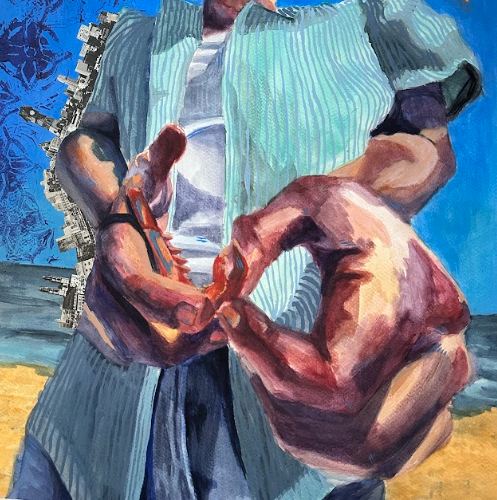
Elephant Rock – Harper Lower

I walk a dog now. I forgot his name on the first day and have been afraid to ask again. I’ve been calling him The Dog. Like a canine Lebowski ego. He’s a big boned dog, and scruffy like that. Naming him myself made me feel less bad about rolling out of bed first thing in the morning to trot him around. He’s a good walker. His tail does this involuntary wag every other step.

The Dog’s owners just had a baby, their first one. They named it Earl. I remembered this. I loved this. A baby named Earl. It seemed too blatant of an old man’s name. I had never seen baby Earl, only known of his coming into the world as the reason I walked The Dog, but I pictured him with little white hairs springing from his smooth baby head and a face so wrinkly you couldn’t determine if it was only pudge. A baby named Earl. Who the hell does that to a kid?

I thought of Earl as The Dog’s baby. A perfect companionship. A sidekickness you read about in books as being trusty. No John Goodman. I think that sort of thing softens a dog of any demeanor. Makes it more boyish in its protectiveness.

We hardly took the same route each day. I left it up to him to point us in whatever direction his nose desired. There weren’t many options. Two, really: up or down the hill. Today we went down to the playground.

The only people at the playground were an old couple and their caretaker. The one noticeable thing differentiating the occupational standing of the woman was her dense black hair. The three of them sat in a perfect statuesque row on the bench, like friends, which overlooked a sort of play structure that was supposed to be a ship. They looked out of place here, incredibly so. They dressed how old people dress; hunched how they hunch. The black haired woman wore a smock.

The bright blue rubberized playground surfacing, new from the recent revamp of the park that had lasted the first month of the summer, made this picture completely wrong. It might have been a nice thing to look at, an old couple and their caretaker enjoying a weekday park bench together, looking out at something, anything besides what was actually there. It really was hard to look at. It wasn’t serene at all. The ship hogged the view.

I guessed the neighborhood schools had started back up. That’s something you stop keeping track of until the signs start to show. I was glad. There would be no little girls or boys shrieking, padding across the rubber to pet the dog. Kids were always doing that. Shrieking. The dog wasn’t even mine, but I still didn’t like any of it. Their fathers eyed me, eyed the dog. He wouldn’t bite, look at his tail, I wanted to say. He has a baby at home, I wanted to say. But all I said was, don’t touch his belly, scratch his ears, he likes that. So it sounded like the dog was mine. That’s the kind of thing a dog can sense: the eyeing of the father. Maybe it carried up through the leash without my knowing, and that’s why it made me so uneasy. The stare, casual, while watchful and narrowed. I don’t have kids. I don’t even have a dog.

This realization made me feel better that I hadn’t been called by the two families I babysat for that summer in a while. Two weeks earlier, I’d taken all the girls, two from one family and one from the other, to the park when the renovations were finished. They climbed, swung, shrieked. They ran in circles like hamsters. One, the oldest, cried then, for whatever reason. Dirt on her dress. Skinned her knee, but it wasn’t bleeding. Whatever Reason. She cried without ever closing her eyes, and they got so bulged and pink I thought they might be permanently stuck that way. The worst part was she wouldn’t let me come near her. I made the other two sit on the park bench with me while we all stared at her crying. And then I started to cry too.

Old people, surely, didn’t cry, especially not in public parks. They were sitting on the same bench–the only bench–I had been sitting on with the two girls. It made me want to go sit on the ground in front of them and cry at how ugly the whole thing was. This blue rubberized playground surfacing. Just to complete the picture.

I walked The Dog around the park’s perimeter. I let him sniff whatever he wanted to, thinking this in some way made me special to him for allowing it.

“There used to be wood chips here,” I told The Dog as he chewed on some weeds, pointing to the blue rubberized playground surfacing. “I bet they won’t have wood chips anymore when your baby is old enough to even stand on his feet. They’ll be outlawed. Something Stupid.” I paused, The Dog was hawking up the weeds he’d just eaten. “Wood chips lodged in the skin of your knee. Now that’s cause for screaming, crying, whathaveyou. That used to be universal. I can feel it now just thinking about it. Your Little Old Man Earl is gonna grow up soft.”

I needed the money. The little girl, the one I’d watched cry in the park, it had gone on forever, and her mom felt horrible about the whole thing. She gave me a hundred dollar bill and a hug. I didn’t tell her I thought the blue rubberized playground surfacing was making kids soft nowadays.

“I’m sorry. I didn’t mean to offend your baby.” The Dog looked up at me. I tossed him a treat from my pocket and we kept walking.

“This whole thing was a castle, actually,” I went on, meaning the ship structure. “A big wooden thing, full of splinters. There was a yellow plastic slide and a tin one. The tin slide was only good if you had on long pants, otherwise the back of your thighs skidded. Let Earl know that. Not that it’s any real use to him now.

“There was a beehive too. Under the castle–the wood platform–they burrowed all up in the wood and rotted it half to death. Or maybe the rot came before the bees. We used to hit that part with sticks.” The Dog’s ears perked up when I said this: sticks. “I don’t have one now,” I said, sorry. “We thought one time we would hit just the right spot and honey would come pouring out. I don’t think the bees were those kinds of bees, though.”

I felt like I was teaching The Dog something about his Little Old Man Earl. Something he, The Dog, would understand on a subconscious level, and convey back to his baby. There used to be wood chips, Earl, The Dog would tell him using the secret code all dogs and babies seem to share. And Earl would know what this meant. Even if I, myself, did not know exactly what I meant.

I was leaving soon, leaving The Dog, leaving Earl by association, and my final summer of neighborhood listserv jobs sent from my mother’s email. I hadn’t told The Dog’s owners I was leaving next week. I didn’t want them to find someone else to walk him so soon. He needed time to miss me. They wouldn’t get this. I would go back to school too, like all the little neighborhood girls. Except there were no playgrounds for me where I was going. The old couple and the caretaker would cease to exist. The blue rubberized playground surfacing would cease to exist. Wood chips already had.

There was one more thing I wanted to make sure The Dog saw. I waited while he peed on a log that was already wet. He didn’t lift a hind leg, he just stood with his front two feet on one side of the log and his back two on the other side. I felt good about this: the way The Dog peed so un-dog-like. It seemed all the more plausible he understood about the wood chips and the tin slide and the honey. I picked up a stick and waved it in front of his nose. He grinned, if you’d even believe it.

The old man had stood up and begun walking around the edge of the playground on the blue rubberized surfacing. He wasn’t making much progress. The tennis balls on his walker seemed like they’d been the objects of endless games of catch with a late dog of his, then repurposed. He grunted as he stepped, almost moaned. But here was something more orthopedic than wood chips. The caretaker clapped joyously. I bet that pays well.

Opposite the playground, there was a long stretch of field before you hit the road. The Dog didn’t get much of a kick out of it. I carried the stick over his head. I felt I had more to say for Earl’s sake or my own.

In the grassy area there are a few thin trees, planted new and fenced off at the trunk along with the remodeled playground. Beyond that there was a single large rock. The kind of rock that is good for sitting on. I knew this rock well. Famously, there is a photograph taped to my mother’s computer of me, at age 7, executing a wonky handstand on this rock.

This rock was perfect for make believe games. “This is Elephant Rock,” I told The Dog. I led him around to the side that faced the road and dropped the stick. He began chewing it immediately. “I named it that, I think. It’s not widely known as that. If you look at it from right here, it’s supposed to look like a baby elephant all curled up sleeping.” I didn’t want to tell The Dog I couldn’t see the elephant anymore.

“It’s rained here a lot these past few years.” I said it more to the rock than to The Dog. “That’s how sand is made. Comes about. More or less. Water wears down rocks and it becomes sand. Eventually.”

It didn’t matter if the dog believed this or not. If he was capable, if he peed without lifting a leg, I think he understood. I walked all the way around the rock, making sure I wasn’t just looking at it from the wrong angle. I wasn’t. “You should bring Earl here, instead.” I meant instead of the blue rubberized playground. “Before Elephant Rock is just a grain of sand.” The Dog seemed to hear this part. He looked up at me, little wood flakes surrounding him and the half eaten stick. I climbed up on top of the rock and sat facing the playground and the old couple and their caretaker. I pulled my knees up to my chin and lit a cigarette I’d stashed in my pocket, a habit these 20 dollar walks easily funded. It was the only thing I could think to do with myself, and, in some way I hoped it would scare off the old couple. I meant to help them by it, show them what a dump they chose to sit around at.

I smoked it down halfway. The Dog was making his stick last. The old man was still walking. He’d made only about a half lap around the ship. I held the smoke in my mouth for ten seconds, maybe longer, swishing it from cheek to cheek so that I could push out a thick smoke signal.

The last ember burned my finger tip. I’d been staring right at them long enough for the caretaker to notice. She waved. I began to get up, or rather, rise up. I was rising. The ground fell away from my reach smoothly, the trees fell away, The Dog fell away. I kept rising taller and higher up than everything. I sat calm and wise atop my elephant, feeling I had always been the Mahout. The animal’s wonderfully slow sway returned the serenity to the little park below us.

The old man raised a finger to us. He seemed rather amazed to me from down there. What a perfect thing to see from a park bench in the deep suburbs on a regular weekday. We walked toward them and my elephant’s trunk swept the ship clear from its spot, tearing up a chunk of blue rubberized playground surfacing. I felt gigantic. My whole body seemed to fill into itself, up there on my elephant, my chest swelled with an elation like landing a cartwheel for the first time. I was above the branches of the trees, above even the telephone wires. The couple and their caretaker were so small sitting there on the bench again, my elephant’s paw could have squashed them like the end of a cigarette butt.

The man had taken his seat back on the bench again to gaze up at me and my elephant in our momentous parade. His stare was not fatherly, in that it was not protective. It was giddy. Child-like. Not overexcitable. “He’s friendly,” I called down.

“He sure looks it,” the man said.

I knew The Dog was waiting for me down in the field with his stick. I hoped he’d tell it to Earl like this.

Letter from the Editor – Fall 2024

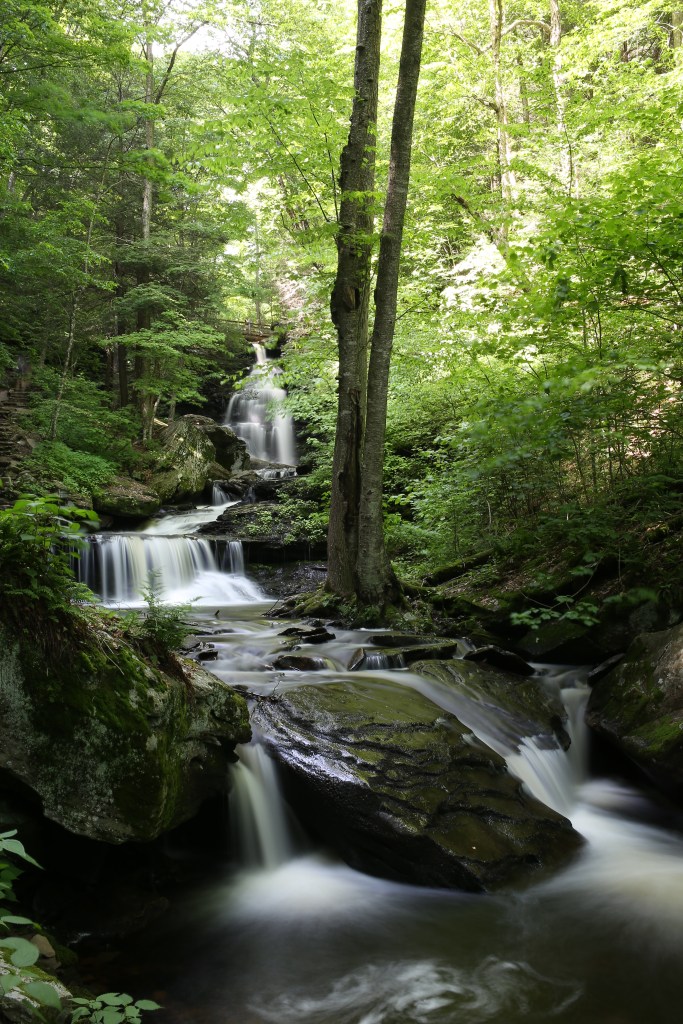
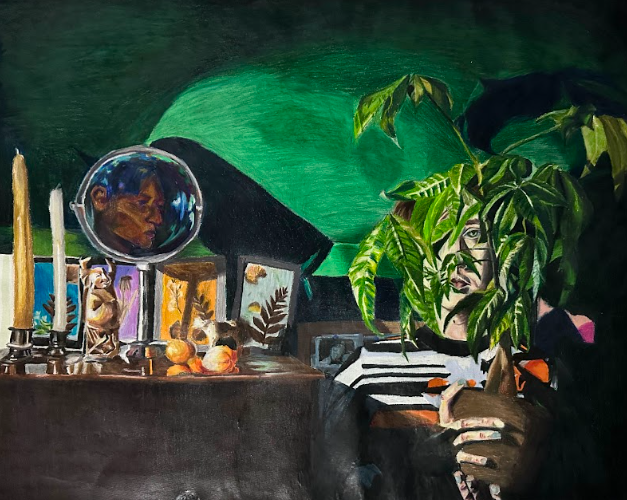
The editing team at The Tributary invites you to enjoy an issue that celebrates nature, history, and the self through pieces that are in challenging poetic forms, historical fiction, photographs, drawings and more.

The website has undergone some changes, hopefully, to make it easier for readers to view full works. Be on the lookout as well for previous issues of the magazine that will pop up on the website! (Yep, we are working on putting the old print issues on the website).

This issue contains work from students who study at Lycoming College. Thank you for dipping into our creative stream. Please continue on, enjoy this issue, and continue to support the journal.

Dandelion by Sara Van Reymersdal

I’ve always been a weedflower

shooting up from sidewalk cracks,

siphoning water from the tulips,

clawing out of the heavy mulch because

the gardeners decided

I wasn’t good enough.

Time and time again—from poison, shears, or wood chips—they hissed,

go away. You don’t belong. Yet I couldn’t abandon


my life on their whim. Each time

they threw me out, I came back.

I flourished in the margins of places they thought inhabitable,

dodged roses with bright pink smiles hiding sharp green thorns.

No one watered me except the sky;

no one fed me except the sun.

Still I blossomed, my yellow mane raised high.


When the heat rose and the wind blew,

I knew exactly what to do.

Without protection, the sunflowers dropped their heads,

the orchids grew pale,

and the daffodils went silent, but I

dug in my roots and bloomed a dazzling white.

The gardeners’ nuisance


became their children’s hope:

a little girl plucked me,

eyes shining,

and blew.

Survival of the Smallest by Ella J. Rossman

On my hike I pause for water by the remains of a tree.

I observe from my sitting place deer bounding past

And squirrels skittering through layers of leaves.

I hear a mechanical roar down the mountain,

Which I try to ignore. A far away crack, then a crash—


Another ancient life lost. My hands find a shred

Of plush moss and I pluck it from the raw, wet roots.

I study it, my eye straining. Water bears occupy

Its feathery green stalks. I roll a piece of moss

Between my fingertips, knowing I can’t crush them.


The species will outlive me. They will outlive the forest

And the rusting metal of a broken chainsaw.

Should the sun burn out tomorrow, or the earth crumple

And implode, the tardigrades will remain in tun,

Left on a planet-shaped husk or flung into space.

Athazagoraphobia by Julia Stetts

The earthworm flattens, and the neon 

Soles of a boy’s Sketchers light up: 

The only ceremony for the thing’s death. 

What’s left: a steam-rolled flesh tube, 

Streamers of guts trailing from behind: 

Cherry-red, piss-yellow, and livery-purple. 

Mid-July heat reduces the corpse  

To a mummified crisp cemented 

Onto grey concrete, hot as a griddle. 

A murder of crows fly overhead. They pay no mind; 

It’s too thin, papery, pathetic 

For even them to pick at. 

The Peace Testimony by Amanda Charowsky

Chester County in the Pennsylvania Countryside, 1777

Her father left at the same time every night.

Two hours before supper— if he was even back for it. She still prepared the cold meats and cheeses, watched from the kitchen as he lowered his head, stepped out into the waning autumn sunlight, and stood at the gate. The diamond windowpanes divided and distorted him, black fragments of a man waiting for another chance. If she couldn’t see him clearly, then she couldn’t see his hope rise and fall underneath their horses’ hooves or battered boots. If she couldn’t see him, then she couldn’t hear his pleas. She couldn’t hear their refusals.

No matter.

The soldiers were clear as day.

The music announced their arrival: the fife’s cry as it played slow airs, the primitive consistency of the drums. Before the war, she’d never heard such music in her life— during the few times her father let her wander into Philadelphia, music was distant and strange, a glimpse into a world she wasn’t born into, wafting through open doors of taverns they passed on the way to market. Soldiers didn’t carry fiddles. She was raised not to have a preference, but she much preferred the sound of a reel or quickstep. Evening marches reminded her of church bells, low and ominous like thunderclouds, high in the sky— waiting to smite and scorch the earth.

“Quite an interesting way to look at it, Esther,” her father said the day before he started the crusade. “I do not see them that way, I’ll admit to thee.”

“Then what do you see them as? Disruptors of peace?” she asked. “Who knows what will happen to the countryside now that they plan to”— the words were stuck in her throat— “to do battle.”

“I think of them as lost men,” he said. “They need a guide. One who is not a general in their line or a congressman making war. One who wants to save their lives.”

“Thou art idealistic,” she said.

He smiled at her as he dabbed his forehead with his kerchief. The summer heat still reigned over them, crawling in through the open windows, permeating the air and sticking to the overhead beams. How would they fight in this heat, she wondered. Perhaps it would deter them, and she wouldn’t have to worry about them reaching her home and the hills surrounding their farm. Blood would not flood the creek.

He will not do what he plans to, she’d thought.

The heat didn’t stop the battle.

The soldiers fought for a whole day, greedily reaching for control of the creek. She heard cannons and gunfire for the first time, sitting inside the Meetinghouse. Did the walls shake, or did she imagine it? “Friends—” Frederick Hatter stood, hands raised. “We shall be safe here. They will not harm us.” Another round of shots sang. Officer’s orders joined the chaotic chorus. No other Quaker spoke during the battle—they sat silently, crushed together as soldiers leaned against the outside walls and loaded their muskets. Esther saw their coats, blues and reds contrasting against their blacks, browns, grays. And she saw the look in her father’s eyes—quiet determination, loud conviction. He wore the same look every Thursday, preaching what God gave him.

“To the rear!” Someone screamed, a man’s southern drawl ringing in her ears. “Fall back to the rear!”

When they left, she saw destruction beyond the four walls of the Meetinghouse. The dead men wore blue, not red. Their bodies lay face down, heads sunk in the water, muskets and swords blocking the current, a violent, makeshift dam. They lay against trees; they fell near the road. Lone men stalked through the fields, on their knees, turning the corpses over to see what they could take. The air reeked of gunpowder and iron. Brandywine Creek’s water turned to liquid rust. She was nearly sick on the way home.

“Do you see?” her father asked, “do you see why I must do this, Esther?”

Every night after the retreat, soldiers marched down the road to only God knew where.

And her father, the bravest man Esther knew, stood at his gate, and begged them to do the unthinkable.

“Leave the army, young man. I will grant you shelter, and they shall not hang you for a traitor—not in my yard, young man. Lower thy sword, and release it from the throat of thy brethren.”

He didn’t stop them, didn’t reach out to grab their shoulders and halt the procession. He walked up and down the line, as if he were searching for someone in a crowd, someone hidden between the golden dirt road and oak trees. On evenings when he was bolder, he handed out biblical broadsides, preached the virtues of pacifism, all the virtues Esther had been taught when she was a girl, sitting on his knee.

The first time, some of the infantrymen turned their heads and stared at him, their march faltered. How many of them had ever met a Quaker? How many were far from home, wasting away in a disorganized troop of men who didn’t know the ways of war? They shook their heads, lowered their eyes as their officers caught them and threatened lashes. “I am sorry, sir, but I cannot.” A boy, no older than sixteen, his uniform falling off, was the first rejection.

 “Next time.” Her father came in just after sunset. “Next time, they will listen.”

Now the soldiers kept their eyes trained forward, hands at their sides. An unbreakable column, building a foundation she wanted no part of. She did not join a side. But anger, ungodly and unladylike, boiled inside her—watching them act as if the humble Quaker was invisible, or worse, a fool, a beggar no one was required to listen to, to help. She wanted to burst through the door and scream at every single one of them. What were they doing that was so important? What Cause did they serve, what kind of Cause ignored the pleas of a common man? They gave six months, a year, to their army, but not a minute to her father?

Do you want them to, Esther?

Would it bring more harm than good?

Her knife sank straight through the bread and into the cutting board. She jumped, thoughts interrupted by blunt sharpness, stinging clarity. The only soldiers who remained, dangerously lingering outside her window, were the officers. Out of the entire line, they were who she begged him not to speak with. Sitting atop their mounts, epaulets on their shoulders and sashes swept across their chests, they reminded her of the sovereign they hated so. Hypocrites, looking down at her father. If they wanted something, it was not his blessings. No, it was his cattle, his corn, his cooperation. If they did not get it, rumors claimed they threatened crimes worse than a mere plague of locusts.

Let the anger take over and ask them what they’ll do to you instead. Shall they insult a young lady trying to protect her family? Go outside and say what you truly think of their army. Throw the broadsides in their dirty, gunpowder smeared faces.

She never spoke during Meeting.

No matter.

Supper would be ready soon.

She waited until the end of the line. She never tried at the beginning—there was a chance he’d hear her, hear the back door open, catch sight of her low in the bushes, a vixen near the henhouse. And if he does would he care? Would he ask what you were doing, pull himself away from the task at hand? Ever so important?  She could simply straighten herself and say she forgot a pair of boiled eggs for supper, or she wanted to surprise him with a pie, hidden in the pantry. She could wipe her hands clean of lies, deceit, as if they were just stains on her apron. Small, easily forgotten, and only noticeable if you looked at or caused it.

If the officers saw her from horseback, they didn’t attract any attention towards her. What harm was there in a Quaker girl going to her summer kitchen? She never gave them a dignified glance, tuned out their sophisticated or gruff voices. They disappeared when she shut the door, whirled around and positioned herself against the wall. She waited two minutes, enough time for her father to introduce himself. Then she worked.

Vixens stole eggs and valuable provisions; Esther only hid them. Apples stored before they needed to be, salt pork stacked between dish cloths, eggs behind a neglected case of old, smuggled Madeira wine. Options were limited—she handled the kitchen, but her father managed what was brought in for harvest, which wouldn’t be for a few more weeks. What they didn’t eat at supper that night, in case there was a lone straggler, a lowly private who lost his way, she gave to the barn cats.

God forgive her, she didn’t feel bad for the private.

What about your father’s trust? Do you abuse it? Do you go against everything you’ve been taught?

No, no, I am doing what everyone else does in war. Bury what you’ve been taught.

#

“Supper is ready.” She managed a smile. She was always quick to make it back in time.

Her father hung his round hat, revealing his head of white hair, and looked out one more time. He faced her, his features drawn, thin in his round, kind face. “Thank you, Essie, but I fear my appetite has left for the day.”

“Not even for conversation?”

He shook his head. “And what conversation will you indulge in? Pleasant, or quarrelsome?”

“I cannot say I know what you mean, Father.”

“Oh, come, Essie,” he said. “It is now part of our meal.” He gestured at the set table,. “I come in, thank you, and we either talk as we always have, or we argue.”

“No,” she said, “we only argue when I see soldiers through the window.”

“There’s a war on,” he said, too simply, as if a common phrase was answer enough—enough for every action and reaction.

“I am not being quarrelsome,” she said. She didn’t leave her spot behind the cutting board. “I am being protective.” He flinched, and she retraced her steps. “All I want is for you to be content, Father.”

“I will be when I finish the mission God has given me,” he said. He gently placed his broadsides on the table. “Go on, you’ve laid out a fine spread.”

“I made it for you, not myself,” she answered. “I shall start evening prayer early.”

Before she reached the landing, she heard her father whisper, alone at the table. “Perhaps I spoke too softly or wrote something wrong. Next time, they will listen if I carry my voice…”

She was falling asleep when the front door opened.

The creak ripped through her like a gunshot, pulsing her entire body, urgency tugging at her muscles and limbs. Good God, what if they were marching by now, at nightfall? What if this was one of their beloved General’s sneak attacks, what he’d done to the Hessians in Jersey? You know what he will do, Esther. If he’s still awake, if he catches a small glimpse, another chance—

She ran down in last night’s gown, hairpins falling through her half-brushed curls, her cap abandoned, heart racing—listening, listening for a lone drum or hushed order, her father’s voice— please, Father, do not—

“Oh, I’m sorry, Essie. We did not mean to wake you.”

Father sat at the dinner table.

Oh, Lord, help us all.

A soldier rose beside him.

He stood carefully, avoiding the overhead wooden beams, and straight, he stood straight, as if he were on parade, hands placed behind his back. He faced her. He wore the signature Continental colors: a dark blue coat with red facings and cuffs, colors dulled in the dim firelight. His waistcoat was red—her mind flashed back to jostling in the cart, staring at bullet wounds, staining their still chests. Riding boots fanned out at his knees, long, lean legs clad in buckskin breeches.

“Say good evening to our guest,” Father instructed.

Esther said nothing.

“Captain Daniel Ainsley of the 1st Dragoons.” The solider bowed. “Your servant, miss.”

Oh, Good God, he let a horse soldier in? She looked past him, found his saber slung across the table, its sheathed blade hanging over the edge, and his leather helmet, black as night, its horsehair plume, white as snow, cascading above the floorboards. Soldiers with muskets were terrifying, but cavalrymen did the Devil’s work. They scouted routes, spied on neighbors, raided, and cut men down as they ran from their horses, their sabers Death’s scythes.

“Thou art no servant of mine,” she said.

“Esther!” Father scolded.

But the cavalry captain grinned. “No harm, sir. She is right, I do not serve your cause. But I have served with your Friends—or former, I suppose. I’ve met and fought with General Greene. Tell me, miss, do you think him a heathen?”

“Not as much as I think you one, Daniel Ainsley. Your General is a dissenter.” Esther stepped closer, bringing herself into the fold. “What is your purpose here?”

It was Father’s turn to smile—he beamed, blasted hope flickering across his face, and he leaned forward. “The good captain has come to hear my pleas, Essie.”

The captain’s resolve faltered for only a second, but she saw it.

“He is not here to do that, Father. Is that right?”

How long? How long had he been listening to him speak, offering him a meal and whatever he needed to desert the army? Did he pretend to read the writings? Did he murmur in agreement? Did he let her poor father believe he was achieving something?

“But you—” Father paused, glancing between her and the captain. “You knew my name, and my mission, and you are by yourself.” His voice wavered. Esther’s stomach turned. “If you came to deceive me, Captain—”

“Sir, I have come with the opposite intentions—”

“And what intentions are those?” Esther asked.

He turned to her. “I have come to warn you and your father, miss.”

A heavy silence filtered into the air. Father was watching her, what did he think she’d do?, Smirk and say, “what did I tell you?” Does he truly think I want to hurt him?

“Sit down, Esther.”

The captain pulled out her chair.

“General Washington plans to retake Philadelphia,” he said as he folded his hands as if in prayer, his tone somber, “before fighting season is over. I cannot say where we will march, but expect the news shortly. The British are aware of this, and we both patrol the countryside. Worse, supplies are low—”

“We are aware of that because of your looting, Daniel—”

“Esther, do not interrupt him.”

“We are beyond taking, miss,” he said. “Both sides have decided that if we cannot possess it, it will be better to—” he paused. She watched as he realized who he was speaking with, the consequence washing over him like a bout of sickness. He leaned back in his chair. In the darkness, his face paled. “Many fields and stores will be destroyed. Homes as well.” He broke eye contact with her. “Sir, it is not safe here. You must leave or stop your ministry. These are last resorts.”

She wanted her father to realize the error of his ways, the danger he brought home, but not like this. Not with a soldier telling him what he must do. A choice may be presented, but not always given.

“I will stay here,” Father said.

“No.”

“Essie—”

“No.” She shook her head. “I will not—this is madness, Father!” She took his weathered hand in hers. “I understand you believe God has led you here, but surely you must consider that He values our safety, our home, our—everything you have worked for, Father. And you will—” God help her, she looked away and laughed. “You will throw it away to preach to men who will not listen!”

“It is not so simple.”

“Right now, it is.” Were there tears in her eyes? “The men who believe in this Cause will not waver, and the men who may are terrified of punishment for desertion. The British need to keep Philadelphia. Isn’t that right, Daniel?” She needed a moment to breathe, to try and collect herself.

“Your daughter is correct, sir.”

“Yes.” Father sighed. “She is smart, my Essie. But right now, you do not understand—I must try to be a guide. I am still convinced I will serve as one, in whatever way necessary. I stay on this path, God willing.”

“You will not listen, then?” Her voice still shook. “After weeks of me telling you, and Daniel coming out of his way to warn us, you still will not listen? And you will accuse me of not understanding, not caring about your mission, about you, Father—”

“I will stay here. I have said my peace.”

For a moment, she was in Meeting, and he finished his testimony.

For a moment, she wanted to believe him.

“I must go.” Captain Ainsley pushed in his chair. “I have been out of camp for too long.” He grabbed his sword first, reattaching the blade to his hip. He tucked the leather helmet into his arm, its plume swaying.

“Will you not take a broadside, Captain?”

“I will, sir.”

He moved the sword aside and tucked the Bible verses beneath the blade.

She was exhausted, and all she wanted was to sleep, imagine this was a cruel nightmare—

“May I speak with you before I leave, Miss Esther?”

He crossed the room in easy strides before stopping at the mantel. Father always said flames reminded him of her hair. “What is it?” She had to raise her chin for a clear view of his face.

Daniel lowered his head, fringes of light brown hair falling onto his cheeks, spilled over layers from his braided queue. His eyes were a shady, stormy blue, reflecting the fire’s sheen. “I do not know how to phrase this delicately.” His voice lowered, a conspirative whisper. He glanced behind them; Father sat alone, staring at a wall.

“You have said worse things in your time here.”

His face didn’t change. “Come with me.”

She stepped back. “You cannot mean that, Daniel.”

He leaned closer. “I offer you pure protection, and nothing more. I swear it. I will take you somewhere safe, away from the impending raids and marches. Surely you have family, Friends in other parts of the country.”

“And if I did… I go alone, don’t I?”

“I cannot provide protection to a man who does not want it…” His fingers picked the broadside’s edges. “Let alone a Quaker. You must understand.”

She tried to imagine herself, alone in a military camp, traveling down roads she’d never heard of, fleeing to Lancaster, or wherever promised small salvation. A terrible existence. A dreadful loneliness.

And a guilt—a guilt that would kill you.

“Would you abandon your father in a time of war?”

“Never,” the captain said.

“You understand, then.”

He nodded. “I am sorry, miss.”

Then his gloved fingers were on her wrist, a phantom grip. They were warmer than the fire. He kissed her hand. “God bless you, Miss Esther.”

Captain Ainsley looked back as he mounted his horse, donned his helmet, and disappeared into the trees, a nighttime specter.

If he were not a soldier, and could protect them both, she would’ve agreed immediately.

#

She was falling asleep, and the front door opened.

She didn’t move, stayed straight in bed—something inside her told her that if she moved, she’d be dragged down, down into a hole, or by a force she couldn’t get away from or crawl out of. She clutched the quilt close to her chest and tried to listen for Father’s voice.

The captain’s voice. Daniel Ainsely’s voice, as if he had spent the past two weeks waiting for her at the end of the road, and finally grew weary.

She heard no one.

A faint, sheer veil of gray creeped through the slants of her door.

Smoke.

The door slammed against the wall, and she stepped into the gathering clouds, the hardwood floor hot beneath her bare feet. She threw herself downstairs, frantically whipping her head around for any sign of him. Get out. He is not here! Run, Esther!

 She fled into the night, cold air hitting her face like water.. “Father!” She cried out. “Father!”

“Essie.”

She raced toward his voice, hoarse and low and drained of all life. “I’m coming, Father!”

Her father lay near the end of the cornfield, between the pastures.

“Essie.”

He was curled up on his side and didn’t protest when she fell to her knees and rolled him over. His eye was swollen, dried blood caked his cheeks. He spit drops onto the grass. His groans hit her like a punch. “Essie?”

“I’m here.” She touched his face. “I’m here, Father.”

“They… they knocked on the door, Essie. I wanted to wake you, but they grabbed me and kicked me onto the ground. One of them hit me, I don’t know where, and another used the end of his rifle to push me down for good. And then they walked into the cornfield with torches, they threw them—such bright torches, like hellfire. Hellfire has come!”

He buried his face in the grass, sobbing.

Their two horses whinnied and ran in circles, bucking up in fear. Their cattle—where was their cattle? Pieces of the fence were scattered across the grass, small pieces kindling. Did she hear the sheep? Their chickens? Was the pantry door open? Oh, God, what had they taken? But they—he said they did not want anything? And why would he lie? Why would he lie- why would he lie, but ask you to go with him? She didn’t understand, her mind flooding with questions, panic—

She heard the roar of flames, tearing through the cornfield, and looked just in time to see the blaze, brighter than any sun she’d seen, so close she felt it on her cheeks. A broken layer of the sun, speeding towards the earth, towards all they—all she had.

Rings of fire, and there was nothing she could do to stop it.

“Father?”

She turned him back over.

“What coats were they wearing?”

He didn’t answer.

She shook him, frantic, desperate. “What color did they wear, Father?”

“I couldn’t see—”

“Tell me. Please, you have to tell me, you have to know…” Her knuckles were white on his shoulders, she choked on her own sobs. “Please, what color?”

“I don’t know!” His voice bellowed, echoing across the night air, briefly overpowering the singing fire. “I don’t know!”

She managed to convey them to the other side of the road. Her father lay unconscious beside her. His breathing was still, but he was cold. Why didn’t she hear him scream? Why didn’t she hear him call for her? Oh, God, had she grown deaf to his pleas?

Did he ever hear hers?

Esther watched the flames rise until they reached the roof, reaching upwards like pairs of wire-thin hands, greedy and hungry for the endless sky.

If God opened the heavens and let lightning strike, she’d wish, against everything.

Go ahead and smite them all. 

Same Day by Julz Martin

I woke up in my bed
And didn’t know the time.
Nobody told me I was sleeping
For 16 hours.

I was dreaming about shit
That makes me cry
But I couldn’t tell you what it was
Cause I never remember.

Every day, I walk the same way
And eat a sandwich that somebody else
made.
I made a path with all this shit
I’m carrying.
Not even hungry anymore.

I can see it on your face.
You hate
The things I do but love the things I say.

Hail by Julia Stetts

Exhuming the Grave of King Richard III

Oh, poor hunchbacked bastard! 

Beneath a parking lot, your remains 

Were excavated: the grave of a dastard 

Crouched in purgatorial chains 

Of sewage pipes and rooty veins. 


An arrowhead at the base of your skull 

Spelt a merciful death in battle— 

But oh! A sword in your ass? How cruel! 

Not so merciful post-mortem: like chattel. , 

Your naked corpse, paraded by your subjects’ bloody prattle, 


Was tied to a horse and dragged through bloody soil, 

Then strewn upon the steps of Lady Newarke’s chapel 

For all to jeer at your short-lived reign of toil. 

Your birth was sinful as Eve’s apple: 

A shunned son. A savaged cripple. 

Polaroid (a Sestina) by Elise Bach

I flipped the glossy paper, the sun’s glare

Illuminating pictures of our forgotten half-truths.

I don’t remember them; my mind pulls nothing

As I try my best to recall them. Maybe they’re trash.

My brain threw away the photos of you,

But I remember they used to be sacred.


To forgetful minds and blackened hearts, what is sacred?

To look back is to half-see reality through glaring

Light. It’s unclear, unfocused—were you

The one shining? Maybe it’s me, and that’s the truth.

Maybe it was both of us. What is truth but trash,

When I look back to recall us and find nothing?


I’m lost now. I call out and only face nothingness.

It’s why people turn to god, to find something sacred

In the absence of meaning. But doctrine is trash,

And the void I forced myself to create is glaringly

Obvious to people who believe they know the truth

About me. Who believe they know the truth about you.


It was my fault that my meaning for life became you.

It was unfair, to place that significance where nothing

Lies beneath. A delusional mind can’t find the truth,

Yet I can’t help but wonder if my soul’s kept sacred,

Some place nested long behind your heartless glare.

I can’t accept it. I can’t accept that to you, I’m trash.


I wonder if anyone else saw the depths of your trash.

I insisted there was nothing wrong with you,

But I couldn’t see. My rose glasses shielded the glare.

They couldn’t stop it all, so I pretended to see nothing.

To a naive, lost mind, my feelings were never sacred,

For how could I be sure my brain spelled the truth?


I watched as your twisted, unsure lies became truth,

As you slowly turned me into a believer. You spewed trash

As a false god. But I have trouble telling what’s sacred,

Especially when the only light in my darkness was you.

If I dared look elsewhere I was surrounded by nothingness.

Vastness. Emptiness. I gravitated towards your glare.


The only thing left sacred is my personal truths,

Your blinding glare made me worthless trash,

And when I see pictures of you, all I feel is nothing.

Testing Limits by Julz Martin

It’s not like
laying in balls of yarn,
but like
laying
in crocheting hooks and scissors.

Seeing everyone as they are,
Big eyes,
listening,
Can take you away.

Riding pride
To learn sin;
It’s like a rush,
Arush in a gust of wind.

Why are you so tired of it?
Its pulling hair,
And bare feet
On wet pavement.