Featured

Letter from the Managing Editor – Spring 2025

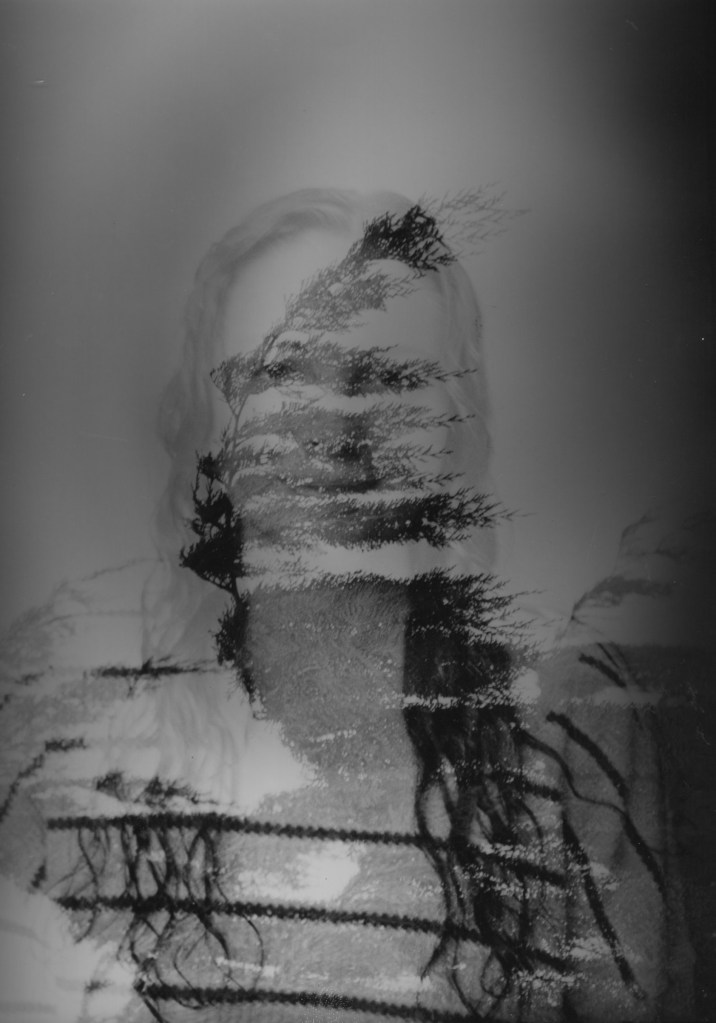
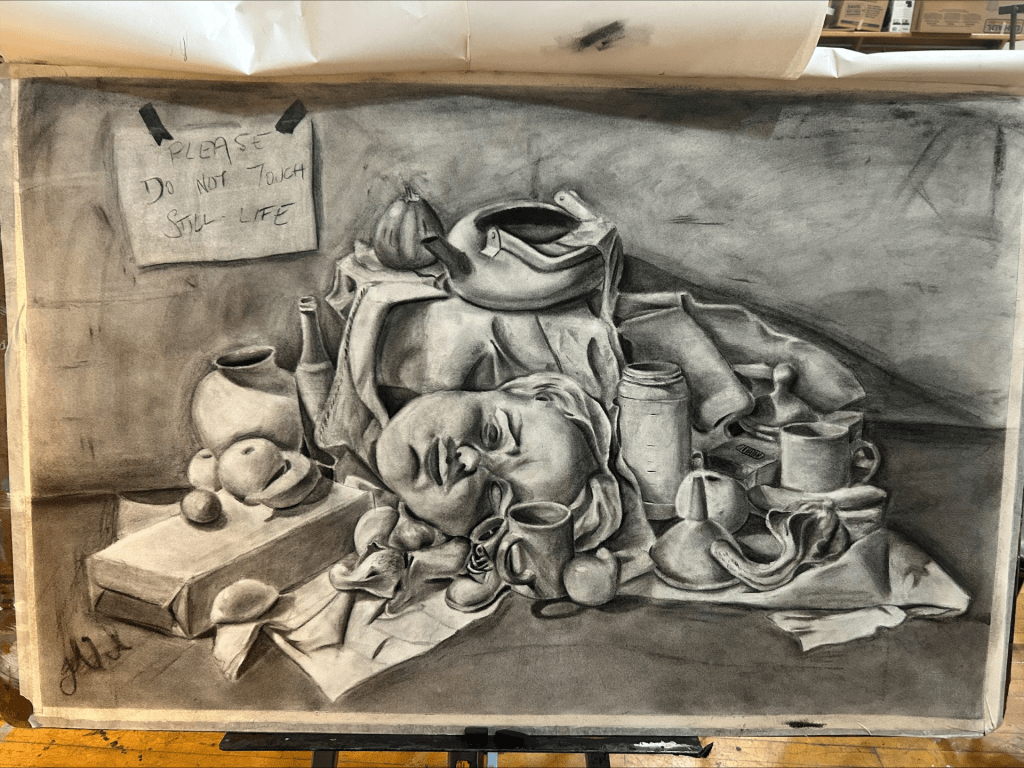
Dear readers, welcome to the third national issue of The Tributary. We received so many submissions from colleges all over the U.S. The final product is a collection of poetry, non-fiction, and fiction that ranges from traditional form to modernist. Our contributors discuss the nostalgia, music, and freedom that stems from every part of their daily lives. Thank you to everyone who has supported this journal as we continue to grow and showcase more and more undergraduate art. Thank you to our diction editor, Caylin, for providing a photograph from her senior art show to be the cover of this issue.

The Tributary team hopes you feel inspired to share your voice upon reading this issue.

This is my fourth issue as managing editor of The Tributary, and I am sad to graduate and pass down the torch; however, I have never been more proud of issue.

Sincerely, Aiden Brown

Contributors – Spring 2025

Poetry

Hazel Beuker – Jolly Ranchers

Hazel is a sophomore at the University of New Hampshire and has been writing poetry as a hobby for nearly 10 years. They are an English Teaching major and have always been fascinated with writing and poetry. They take inspiration from authors such as Mary Oliver and Rachel Field, and like to write about their childhood memories, as well as nature and the human experience.

Madeline Chandler – Aubade Featuring a Worm

Madeline Chandler is queer, nonbinary poet from Spokane, Washington. She currently attends Linfield University and is in the third year of her creative writing and theatre arts double major, with plans to continue on to get their MFA post undergrad. She largely draws inspiration from nature, the queer experience, and the complexity of memory, and hopes their poems encourage others to consider the world, or even just a moment in time, from a new perspective.

B.M. Hronich – She is Unfulfilled

B.M. Hronich is an undergraduate student at Rutgers University pursuing a major in biology and a minor in creative writing, in hopes of pursuing a career both as an author and a physician assistant. In addition to her studies, she is also an emergency medical technician. Her work has previously been seen in Footprints on Jupiter, Rock Salt JournalFlash Phantoms, and The Rutgers University Writers House Review.

Logan Edwards – The Abbeys

Logan Edwards is an English Literature student and a senior at The University of Mary Washington. She is the co-president of her campus’s poetry club, Fine Print (@umwfineprint). This is her first poetry publication.

Danielle Slater – Pelagic

Danielle Slater (Class of ’27) is a student at the University of New Hampshire, pursuing a degree in marine biology with a minor in environmental conservation. In her free time, she enjoys writing poetry, playing guitar, and collecting vinyl records. Much of her creative inspiration originates from the ocean.

Asher Frost – Scenes from a Goblin-town

Asher Frost is a queer, chronically disabled, neurodivergent writer who wanders the frozen wastes of Alaska. They love all things horror, sci-fi, and fantasy. Their short fantasy story Fluff and Fortunes is forthcoming from Pressfuls magazine. They are currently an undergraduate student at the University of Alaska Anchorage studying computer science (because of their love of speculative fiction).

Olivia Macneil – Untitled Poems for Lambs

Olivia Macneil is a writer and student in rural New Hampshire. She is pursuing a double degree in English and Women and Gender studies from the University of New Hampshire, where she is also a content editor for the student-run publication Main Street Magazine. While she likes to write about whatever idea comes to mind, most of her writing focuses on intertwining nature, growing up, and life’s little gifts. When she isn’t found scribbling ideas and words in her notebook, she enjoys crafting, gaming, and cooking.

Non-Fiction

Hannah Kim – I Hate Spotify

Hannah Kim is a senior at the University of Pennsylvania majoring in English with a Creative Writing concentration and Cognitive Science. As someone with an interest in creative writing since high school, she has participated in the Iowa Young Writers’ Studio and currently works for the Center for Programs in Contemporary Writing at Penn. Her hometown is Glastonbury, Connecticut.

Fiction

Viach – Running

Viach is a Communication and Creative Writing student at Rutgers University. She is inspired by youth, expression, ecstatic movement, and dance music. She spends springs and summers in New York City, selling her paintings on the street and making stuff up.

Sabrina Burns – Hesitation

Sabrina is a last semester senior at Rutgers University—New Brunswick and is majoring in English with double minors in Digital Communication, Information, and Media and Creative Writing. She has studied for multiple semesters under the legendary authors Joyce Carol Oates and Roxane Gay. Sabrina plans to work as an editorial assistant after college. When she is not acquiring manuscripts for Rutgers University Press or researching AI ethics for the Critical AI journal, she dances the night away at the Rutgers Ballroom Dance club and pens poetry with her friends.

Kevin Sandefur – Already There

Kevin Sandefur is a recently retired school construction accountant currently pursuing a Bachelor of Applied Studies in Creative Writing at the University of Iowa. His fiction has appeared in The Saturday Evening PostThe Gateway Review, and Pulp Literature. He lives with his wife and two cats in Champaign County, Illinois, which is a magical place where miracles happen almost every day, and hardly anyone seems to find that remarkable.

Harper Lower – Elephant Rock

Harper Lower is a student residing in Philadelphia, PA pursuing a degree in English and Writing. She enjoys both writing and reading short stories and draws inspiration from some of her favorite short story authors.

Jolly Ranchers – Hazel Beuker

They’re tossed to us

where we float in the pool.

My arms and legs are sore,

but I am happy.


They taste of brightness

of radiation and glee.

I like the blue ones the most,

the way they stick to my teeth.


Their flavor mixes with the chlorine

and I get water in my eyes.

But I eat them anyways

Because it means swim practice is done.


And suddenly,

Summer is over.


I don’t eat them anymore,

they’re too sugary for me now.

But the blue is still my favorite flavor,

and the taste of chlorine stays on my tongue.

Aubade Featuring a Worm – Madeline Chandler

The sky cannot decide

shine?

and neither can I. Rain

Rest or rise?

We settle on both.

I wear sunglasses and a raincoat,

and trod across soggy, squelching grass

my hair slowly soaking

with every raindrop racing past.                                

A block away, my arms are around your waist,

whispering sweet nothings, like rain on a tin roof;

and in my head there’s a foggy thought

that there was something I needed to do.

I patter through puddles

in the dusky dawn light

and dance around the corpses

the sunbeams won’t be able to revive.

In my mind’s eye

I laze like a goddess in our bed;

you annotate another article

I annotate your hips instead.

The pavement is a graveyard

I know would make you cry and so

I pick up a bloated form-still writhing-

and place it where the rain can’t go.

At home, still buried in your neck,

I don’t feel the slime.

And that class I was supposed to be at

has entirely slipped my mind.

I saved a worm.

I put on the kettle.

The rain pelts sideways but the sun is still blinding.


She is Unfulfilled – B.M. Hronich

The harp’s notes fluttering along the horizon

Each kiss, each whisper, floating on the gentle breeze

Auroras stretching past the symphony of stars

A majestic muse unraveling with ease

The marigolds, the lilies, the daisies dancing

The beautiful reverie in which they seize

Whispers of the life unseen

Ideas and fantasies unraveling

Fingertips skimming past the surface

Each new spark dazzling

Studying the map’s intricacies

Glares at the sight, thinks,

This is finally happening


Climbing branches toward the glow of ethereal morning sun

The scent of sweet nectar dribbling down the tree

A glimpse of its radiance thereafter, how it glimmers

Euphoria in each blessing: to lift off, to be free

The discovery of this solace, the opportunity thus malleable

How this new life awaits, how it rests in the key


The strike of lightning: the calamitous darkness falling

Each of the once glistening stars shattered

Insurmountable weight rolling over, flattening each tree

Dwindling daisies are scattered

A trace of withered lilies

Lost remnants of what once mattered


The angel merely falling, Oh how she comes crashing down

The harp’s torn strings, the harmony lulled to end

Her wings once soft are stiff: stagnant, her despaired flight flailing

The insurmountable weight looming over her, only to watch it descend

What’s inside melting outside of her

To this empty life she is condemned


An expired dream mourning

She visits the grave of the lost cause

And finds the wandering memory murmuring

The remnants of what once was

The Abbeys – Logan Edwards

I followed the vibrations to the chapel

expecting to be scorned by pews of real people,

the ones to whom god answers in a delicate dream.

Hit by the emptiness and a need to laugh,

listening to the organ sound in my body,

a chord hit below my sternum and released a cold breath.

I had to leave. I could not stay.


Never religious, only confused

because god does not live in the music.

So beautiful were the voices of the choir that echoed,

the glass stained but not broken, colorful and light,

the same church-chapel but in a new magnitude.

The bricks that built it create a whole city.

nothing is the same here. I wish I were changed too.


Another abbey on a silent walk is broken to pieces.

no god can be discerned in the rubble or the mist

but believers prayed here too, long ago.

The apples were easy to crush with my heel,

no organ to reverberate the heaviness

of the walls that stood and the walls that did not.

No noise pierced through. I could not bear it.


I wish I could speak to the banisters

and hear more than my own voice echoing back,

breathe in the air and feel the pressure break

my old life and bring me a new one.

If all were to blend together and uncertainty vanished,

if god were to live in my attic,

I would request an organ song and sleep soundly.

Pelagic – Danielle Slater

Do the benthic creatures ever look up?

Would they mistake my buoyancy for flight?

I float amongst a constellation of bioluminescence

Perpetually bathed in hues of blue light


To the bottom of the ocean, I am a bird

To the birds, I am a negligible ant in the dirt.

But I’m not foolish enough to try the things they do.

I despise the excessive energy they exert.


Why do they fly when they never reach the moon?

If they want control of the tides, they’ll never gain it.

Why do the infauna dig despite never reaching the Earth’s core?

To join their molten kin among the layers of the planet?


They won’t need to bury themselves any longer.

The world’s untimely decomposition will do it first.

Smoke-soiled clouds seep into the sea

Under hypoxic water I remain submersed.


When the great conveyor slows,

And the oceans someday dry,

I will suffer the same fate as those I pity.

I will suffocate in the mud to pass the time.


Nothing else left to do, then.

I’ll hide in a hole in the earth while waiting to die

An imprint of my bones will stain the mountains

The only tangible thing to remember me by.


Until then, I am a bird.

Scenes from a Goblin-town – Asher Frost

1.

A trickster down Yeshien Way

says I don’t know half’s what I say.

Told him he lied

He koinsidently died,

from a rock to his noggin anyway…


2.

Too many cooks in the kitchin

too many wysards in the pot

If they don’t stop they’re sisslin

they’s be a meel cooked too hot


3.


Me huzband says he won

sexty three skull drums

“Two many” I says

only one drum-head

He makes us goblins look dum.


4.

Hazbruk thinks he’ll fly, y’see

but he’ll only die, y’see

Cuz goblins walk by, y’see,

or maybe swing from trees

I skeptikly let him go,

from the mountins high, hoho

but a fool am I, I know,

cuz he crashlands in the sno


5.

The king came to me,

a goblin sykatrist,

to redeem

a kognitiv dyagnosis.

But he came to mok me

“Hyooman minds are fairer.”

That’s why I sed he

has fundamental attribution error

Untitled Poem for Lambs – Olivia Macneil

Down River Road,

the devil’s disciples

testify his word over the FM

as I pass an angel split open

from tummy to neck;

the poor man’s trophy.

I once had a (southern) friend say

this is the South of the North

and she’s right; it makes itself

known in stickers, flags, and how

proper knows nothing here

except tongues spoken to elders;

nothing proper about picketing

to burn the lambs,

but the wolves do it anyway.

Who are they saving?

Their kids, their pride?

They are only lambs,

they say,

so I say it right back.


The South seeps into June, too.

My mother makes sun-tea in dung

hung air and bites at the bittersweetness.

All across the county,

little lambs come together to

sing and dance and love

where the wolves breath is

harder to feel; some lambs

have never seen buildings this tall

or sheep this old.

When the party’s over the lambs

retreat to their pastures but not

without wisdom given by sheep:

The wolves will be there, they always have,

they say,

but so have we.


This is the South of the North.

When the lambs run out of land

they feed on the starred and striped

fields they can’t pitch on. Wolves

will continue to picket, yes, and the

split angels will be strung. In the meantime,

the devil and his disciples should

know this:


There will be kisses

only the creek will know.

There will be dollar store

lipsticks and closet-tucked

shoeboxes full of more.

There will be summer-made

move out funds and hope for

lights brighter than the stars.

There will be gods who hear

prayers you can’t fathom and

they will answer to the lambs.

There will be lambs.

There have always been lambs.

I Hate Spotify – Hannah Kim

Spotify has a feature where you can see the current listening activity of the people you are mutually following. Sometimes I send screenshots to my friends when I catch them listening to songs I also like, or if I catch them listening to Pitbull on a Tuesday at 3am for some reason. There are people I was only slight acquaintances in high school that I knew I would never talk to after we graduated, but I still know that they listen to Long Live (Taylor’s Version) a concerning amount of times, and then there are people who I see listening to the playlists we made together. Ultimately, this feature is like a high resolution telescope pointing in the wrong direction— we can see such an intimate part of each others’ lives, but it means nothing without context.

I only know you through your Spotify friends listening now. You’re always listening in the later hours of the night, when everyone else has signed off and it is just us, listening to any range of music at 2 in the morning. I wonder if you are also speed-writing a final paper. I wonder if you are also playing slow songs while sobbing at your desk. I wonder if you choose angry songs when you feel messed up. I wonder if you see my listening and wonder about me like I do you.

Looking through your playlists is second nature now. You’re the only other person who puts work into the names and descriptions and I read the quirky vague phrases and pretend we never cut contact, that I can message you right now to ask about questionable song choices. I’ve heard you’re in a completely different place now, all apart from any of your friends or family back in the north. The friend I talk to daily talks to you daily. My mom was best friends with your mom. I was best friends with your younger sister. I was best friends with you.

At our town’s small coffee shop before you left for undergrad, we talked for some time. I wonder if you knew how much I looked up to you. I could never see any flaws, and there were some, but I could never pinpoint them. When the rain battered against the window, I sipped at the mediocre coffee and listened to you talk about your regrets with college applications, and I could feel your deep-rooted sadness like it was a tangible monster brushing its claws around us in our little corner. Swallowing, I tried valiantly to muster up the words that would successfully throw all the admiration I felt to you, but my immaturity and bumbling youth was only able to create a wooden sword. I watched as the monster simply absorbed it into its abyssal belly.

There was not much different about this talk than our other ones, but it felt like I was scraping myself bare. You remained cool and collected as always but I like to think you also felt rubbed raw. We skirted around words like “depression” and “anxiety” and “mental health” because we had grown up immigrant Korean American and they might as well have been slurs. Yet in our roundabout, twisted way, we discussed our experiences with them more deeply than any psychologist could.

You know, when you feel like, it just doesn’t stop… does it ever stop?

I think it will get better. I feel like it gets better, knowing I’ll be away from here. But I’m not sure.

Sometimes I don’t think it will end. I can’t see it getting better no matter what good things come my way in the future.

Well… we just have to hold out hope. I wish I could give you better advice. I can’t.

Maybe in the future, when we’re both fully out of this place, we can look back and see.

Yeah.

You admitted to me that you copy pasted the same “Why [insert college name]” for every application, and that I should not do the same. I did not ask why you made such a foolish choice, because I knew: that’s what “it” does to a person. With no one else could I use the word “it” to mean everything without ever once clarifying. Eldest Korean daughters, considered the most likely to succeed by the (too) tight knit Korean community in this (too) sleepy town, both with the emptiness beneath our retinas that we could only see if we looked in a mirror or in each others’ eyes. To us, “it” meant the low thrum of anxiety, never ending parental pressure, the ever bearing weight of personal ambition, having our respective generational depression fall to us, and everything in between. I find myself searching for that unspoken communication on what “it” means with others every day. But maybe “it” meant something completely different to you. I would not know.

The truth is, time has smoothed out all memories of you. In my mind, there are no sharp moments, no rough patches. They have all been sanded away, leaving an ideal friendship that I clutch onto like a dehydrated mad woman sucking at a straw, a couple drops refilled every once in a while by my obsessive checking of your Spotify profile. I admit, obsession is the correct word, but not the derogatory connotations it comes with. Yes, I can name the songs and artists you currently listen to most often, but that is all I know of you.

We have no contact, no other social media, the only indication that we even knew each other is through this damned music streaming app. Lately you’ve been on a movie album phase, and I wonder what listening to the Oldboy and The Handmaiden soundtracks invoke in you. Have you been watching what I’m listening to? Did you maybe watch Succession because I added the theme song to my latest playlist? I mindlessly scroll through your account when I am struggling with late night deadlines, thinking that if I look hard enough between the lines of music, I will be able to tilt my binoculars to actually get a glimpse of how you are actually doing.

The final minutes of our coffee shop conversation ended with me rolling up my long sleeves, placing my wrist on the table, and asking again, redundantly, if it’s ever too much for you as well. You fiddled with your sleeve, commented that we were both starting to tear up and that it was a sign to go. I’m sorry about that. Maybe I did place too big of a burden on you, making you my best friend and role model and subject of unwavering admiration when you too, were still so young. I wonder if you realize you need to forgive me for that.

Whenever I listen to Charli XCX I think of you. Whenever I drink mediocre coffee when it’s raining I think of you. Whenever I feel “it” creeping back, though at a much lower level now that I am out of that town, I think of you, and if you have also beaten “it” back. And whenever I open Spotify I think of you, listening to music the same time as me across the country, growing and having experiences that I am no longer privy to.

I hope you hurt a little. I hope you hurt a lot. I hope you’ve looked through my playlists.

Running – Viach

I’ve started going on a run every night. Good training for my line of work. More importantly, it helps with the shakes, you know? The shakes. They start from the base of the spine (a tingle at first, a warning) and crawl their way to my scalp to my arms to my hands till you see it just about as much as I feel it – the shaking. 

My best friend, Neith, told me he thinks it’s all the things I’ve been mixing finally catching up to me. Best friend, a loaded label. But that’s what he is – the best friend a girl could have, if you aren’t big on asking too many questions, which I’m not – and so he is. 

Neith’s smart. He’s gotten us in and out of weird deals, stolen wheels – maneuvering our way past spastic plugs, angry drivers, the occasional run-in with a hokey hook-up. It’s like witnessing a miracle firsthand – to see how he snuffs out the flames just as they’re starting to fan. 

So I’m happy to give him credit where it’s due but this time, I think Neith’s wrong. I think the shaking happens because I am afraid. 

A hamster stops on its wheel. It takes a pause, a look around – the food, the home, the cage. It begins to run again – backwards. In other words, in style

Time. Echoing the wise sentiments of Missy Elliot, let’s reverse it. It’s a Friday. Isn’t it always a Friday? 

Neith and I were in Fucktown, USA, a block past their only gas station, because he “knew a guy” and I know Neith, freezing our asses off. This was before I had an ass to lose – before the runs started toning me up – so I was firmly in the negatives, ass-wise. A sight for sore eyes. 

Between the two of us, we had enough little glass bottles in our backpacks to open up a miniature bowling alley, but neither of us were sniffing. No, this was all business. 

“Where is this fucking guy?” Neith’s impatient. Unusual. Too much time on the road. “Two minutes then we bounce.” 

“Yo, my bad, my bad.” Breaking into a jog, Mr. Fucking Guy in question. Otherwise known as –

“Chris.” Neith looks happy to see him which means this guy’s got money or a place nearby. His docs are dirty. I’d bet a Benjamin on the latter. The two of them slap palms, a bill moves from one to another, and Neith shrugs off his backpack – canvas, dark blue, with a zipped front pocket he let me have at with a bedazzling gun after a particularly whacked night out. “I’m gonna want this back.” 

“Gotchu, gotchu.” Chris takes the whole thing, plastic gemstones and all. He looks at me for the first time – an up and down, blink-and-you’ll-miss-it up – and after a stupid smile I pretend not to see, jerks his head north. “I’ll take a look when we’re at the house. You picked the perfect night to crash. New couch.” Consider me $100 richer. 

And for interest, tack on about half of whatever Neith’s just zipped into his left coat pocket. Dolla dolla bills, y’all. 

Chris’s place might as well be any other place. They all look the same after a while, no matter how big or small, with Chris’s being the former. A too-yellow front light, a cube of brick or stone with this thing or that hanging off of it to keep the rain away. Except this one time – an older lady who owned a real pink house and a lifesize ice statue of her bernedoodle or goldendoodle or malti-schnoodle dripping all over her retiled living room while her manicured hands, I’ll never forget it, thumbed through greenbacks like she had something to lose. Whatever it was, it’s none of my business. But I remember looking at her and all the blood rushing to my head – auburn hair cut to the chin, a floral collarbone tattoo, a slight limp as she walked. 

For a moment, she looked just like Cynthia. 

Our delivery to Barbie’s Dreamhouse would be about a year ago this month. In which case, happy 2nd birthday, Princess Cuddlebug. What I would do to be reincarnated as you in my

next life. 

When he’s done making us stand out on the lawn listening to him ideate about what to do with all the space in the joint, Chris takes us through the back – a godless arena of newly pitched white wedding tents, clear liquor handles, probably everyone and their mom within the square mile – into the kitchen. That’s when I smell it. It’s subtle but it’s there, the sweet chemical tang. My hearing affirms my olfaction: the scrape of metal spoons. If my imagination isn’t just insisting on filling in the blank, I swear the clack of a needle follows. Cooking up. 

There’s no place like home.

#

I’ve had this recurring dream for the last six weeks. Neith and I walking up to a big brick block, guided by the warm glow pouring out of its sky-high windows. Our unzipped backpacks are chock-full of the flavor of the day. One by one, as we make our way closer, they fall out behind us – the bottles, the flower, the powders, the crystals. Without the load, I’m as light as a feather. I’m transcending. I’m damn near the Buddha. Then the front door swings open – wide open – to let us in and that’s when the scent hits me. 

Creamy potato casserole. French onion soup. Sugar cookies topped with raspberry jam. 

Messages from the Ether. Subtle, like getting smacked upside the head with a gardening spade. True story: last March, a drop-off gone sour. 

The first time I woke up and told Neith, he turned into the next McDonald’s and bought me a vanilla ice cream shake. By the fourth, his hand was already on the sound system, cranking up the car speakers. Interpol, I remember. The fuck is Interpol doing on the radio? 

Ether 3, Neith 1. 

#

The only noteworthy difference between Chris’s place and all the others is that he has the heat on sweltering to combat Mother Nature’s seasonal Altoid breath. I’m no fucking temperature expert but it feels like a dramatic overcorrection. As we make our way across the kitchen, every single one of my three layers starts settling onto weeping skin like cling wrap. Amidst pushy drunks, I’m last week’s leftovers. I’m a suffocating sofa at an estate sale. I’m a wound dressed on a battlefield with finite medical ordinances. Worst of all, the music’s cheeks. Nobody’s dancing except for the truly and unruly plastered. Then there’s all the dope in the kitchen. 

In other words – 

“Whack ass vibes.” I say this directly into Neith’s neck as our host pushes through the crowd, substantially smaller than the one outside. I spy what is likely our destination, a closed room, sectioned off with cheap red velour ropes and a large man. Spare me. 

I can tell he’s riding a different wave, locked in like a motherfucker. We could be planted in the middle of Grand Central Station right before the holidays for all it matters; Neith’s head stays on a swivel and our next moves. But the guy that he is, he humors me.

“Forreal, Chris said it was a getty.” He shrugs. “Only one night.” His tone is all polished granite and summer breezes in the Hamptons but when he glances back, I can see the apology rising in his eyes. Maybe this means he’ll finally let me bedazzle the steering wheel. 

I decide to console myself in the meantime with the prospect of having a real shower. What’s that bit in the Old Testament? Something like – Woman cannot live on wet wipe alone.

Facts. 

Chris walks up to the gates of Heaven. God looks different than how I imagined as a little girl – taller, darker, flat-top fade. Is that a black Stussy hoodie under his bulletproof vest? His eyes glide over Neith and I – sweaty, dirty, maybe coming down from a high off of our own supply – and exchanges a look with Chris. Judgement Day. After a few words volleyed between them in hushed tones and another long stare, big G swings aside the ropes and the door, allowing the cooler air to tickle our cheeks. Paradise. I thought I might have a shot at it. 

But upon entry, the faces greeting us are all wrong – these men would never make it to the good place. I can’t say I recognize the features but the suits – the color of tar with steel thread running through the breast pocket – unmistakable. 

The increasing ivory of Neith’s tan tells me all I need to know – this was not on tonight’s

itinerary. Oh shit. 

We noiselessly take a few steps in the direction of the door and back up into a wall of flesh and Stussy. Across the room’s square feet and the partly disrobed women whose own are jammed into heels, one of the suits looks right up and at us. Does he recognize us?

Administering one quick tap to the backs of his buddies, he stands. 

Oh shit

#

The hamster continues to run, its little legs still moving backwards. On and on and on it goes. 

Coming to a stop just shy of seven months pre Chris delivery. Three and a half weeks post Cynthia. April or something. 

I haven’t seen most of these kids since my move, a surprise that was sprung upon me not a day after I unzipped off my white eighth grade graduation gown. A milestone occasion that was marked by outraged teen tears and my beloved flip phone being flung past my arm by the latest roided out idiot boyfriend in the home rotation. Stationed in North Carolina, call the Reaper.

Maybe the guy wasn’t such an idiot after all, maybe he was social suicide prevention.

Jasmine and Helene, Emerson’s Best Hair and Most Likely To Be President respectively, employ their fake ID’s to cut little white lines on the back of my stolen IPhone. Some perv is yammering at my side about Interstellar or Murakami or possibly, cryptocurrency. 

“I like girls,I try to tell him, but I don’t care enough to raise my voice. 

This is evidently not a quality that Yappy and I share. He takes my lean away as a sign to yell even louder. Jesus Christ. “You want a drink? You want a drink? Nah, nah, nah. I’ll get you a drink. Vodka? Tequila?” I guess a welcome reprieve from the woefully oblivious. A second later, someone turns down the tunes and I consider sending up a little prayer. 

So does Helene. “Thank God. I couldn’t hear myself think.” I suppress the impulse to ask why she would need to do that right now. “And what is the ETA on Arpel-Warren?” 

Jasmine giggles, her eyebrows starting to waggle. A beautiful girl, who emotes in ways one might only expect from the clinically deranged. “Ok, ladies of the lines. Our guest of honor first.” Her pale pink acrylic nails hold out a dollar bill, firmly taped into position, and grins, prompting me to wonder how she stays so alarmingly cheerful, always. It can’t be the coke – the  very same stimulant that makes people snap their gum and glare at you in the dive bar bathroom line. Or the little town with the houses stacked on top of each other, with its occupants who never leave. Or maybe she just sees it all differently than I do, with a mind that makes it feel okay. 

“Thanks, I’m alright,” Like a good visitor is, at least after three weeks of leaving a human-shaped indent on their blue velvet pull-out. I don’t intend on overstaying my welcome; I hear it’s happening in California. 

“You sure?” Jasmine doesn’t wait for me to answer. As her roommate leans down to sniff,

Helene squeals. 

“Finally! Arpel-Warren. It’s been soooo long. You have no idea how happy we are to see you, we’re basically in a drought because our other guy got real time, which I’m sooo -” 

My gaze meets more rings than fingers, a bleach blond buzz cut, a camo sweatshirt. Not assorted splotches of the military variety, the real kind. Like tree bark. He looks around and then each of us in the eye, something acute behind his stare. Maybe I was too quick to write him off as a garden variety fuckhead. 

In contrast to the stir surrounding his arrival, his response is simple. “Delivery.”

Out of his pocket, Arpel-Warren produces a clear baggie, refreshing the girls’ waning supply. As my hostesses go to town on the rock with the feet of their designer handbags, I spy Yappy, two red Solo cups in hand.

Suddenly, the voice of our delivery man is closer than before, a quiet hum in my ear. “Don’t drink that.” 

“What?” 

He doesn’t repeat himself. Instead, as Yappy reaches the counter, Arpel-Warren grabs the cups before the carrier has time to react and pours their contents into the sink. Goodbye forever cherry seltzer and Jose Cuervo. And whatever the fuck else was in there. 

Yappy fumes. “What the fuck?” 

A covered switchblade slides from Arpel-Warren’s sleeve into his hand. “You know what the fuck.” 

Yappy, in a dazzling showcase of his cowardice and an intact self-preservational instinct, mumbles something under his breath and turns tail. Arpel-Warren and I provide the soundtrack to his walk of shame with some loud variations of fuck you

“Go dig a hole and die?” Repeating my final adieu, the stoic mirage of Arpel-Warren’s face breaks out into the first smile I’ve seen on it, smoothing out its harsh edges. In that moment, I’m transported back to Emerson’s concrete playground, running the perimeter alongside a beaming boy – the platinum cut swapped for a mop of brown curls, a missing front tooth, a range of Scholastic’s finest tucked into the front pocket of a Nike backpack embroidered with blue initials. Soaring. 

I smile back. I can’t remember the last time my face moved that way, free of chemical inducement, since I left Cynthia’s. The lightness in my head spurs laughter, deep from the wells of my body, and I decide I want to do it again. “Hey, I’m not one to turn down free drugs from strangers.” 

He doesn’t return the laugh but instead studies me with a fresh expression – something between apprehension and appreciation, maybe. 

“Not from scum like that.” Arpel-Warren is dead serious, a gloom swallowing the smile that lived between us just seconds before. After a moment’s contemplation, he pulls a silver cigarette case out of his pocket, home to tiny plastic bags. Shaking two capsules into the palm of his hand, covered in fading tattoos and a heavily scarred line, he swallows one and offers me the other. The smile returns. “If you want to put your money where your mouth is. But no pressure.” 

My hand fidgets around in my jean pocket. I look at the smile and think of the boy. I wonder if he remembers too. 

Can I come over after school and play superheroes? 

I wish! My mom isn’t feeling good. 

Mine either. I’ll race you to the big tree. 

Okay. 

Ready? 

Get set. 

Go! 

It takes me all of five seconds – true to my word, the cap is down the gullet. If I’m wrong and I’m left for dead, at least it’ll be him instead of Yappy. 

#

I’m on the edge of a mountain, overlooking the beginning of everything – time, space, life, consciousness, pastel pink Bic lighters. The cosmos seem to kiss me just so, even when there’s nothing there to press against. No form, no shape, no worries. I just see. I just hear. I just smell. Everything gets bigger and brighter, swelling until there’s no room left for anything to go.

Until it’s so big, it’s really everything. Until it’s so bright, it’s dark. 

When I open my eyes, there’s the couch. There’s the randos from middle school. There’s Arpel-Warren. Just seconds after my crash landing to a smaller world, he’s back in it too and the truth bubbles up to the surface.

“Dude. This is really good shit.” 

Arpel-Warren looks like he’s seen a ghost. His cheeks are wet with tears. 

“Deadass.” 

Exchanging incredulous smiles, we pop beer tops off the living room table and settle in to people-watch. A couple stacked on top of each other like a precarious game of Jenga. Stragglers bent over a garbage bag. Girls with body glitter and little tops and long cigarettes. Groups of boys steadily increasing in volume, cognac in hand. The gyrating, the thrumming, the fire under the floorboards. Friday night magic.

I sit with Arpel-Warren like flies on the wall, overlooking it all. So bright, it’s dark. 

Out of the show emerges an AC/DC T-Shirt drenched in sweat, gesticulating wildly. After a beat, I realize he’s talking to us. Or rather, to Arpel-Warren. 

“- here right now, fuck! I don’t know how bro, I think -” 

The seat beside me in the previously shared sofa of residence is left vacant as

Arpel-Warren shoots up like he’s been stung by a particularly spiteful bug. Pupils still dilated to all fuck, whose to say from the drugs or the adrenaline, he turns to me and nods. “Gotta go.” 

In a split second decision, seeing that there’s no “I” in that statement, I take it upon

myself to leave with him, feeling my head hover inches above where it should be in my post-pill haze. He’s fast, feigning the near-spill of a full beer to encourage others to move out of the way until we’re outside. Kind of ingenious, actually. I want to ask what on Earth would make him kill his high this way but I don’t need to. Who the fuck wears a suit like that to a party? 

At the question, Arpel-Warren finally looks back, eyes like marbles. He glances at me, his unsolicited passenger, and tilts his head, almost imperceptibly. 

Ready?

Get set.

“Go go go!” 

We’re running and we’re running and we’re running and I don’t think I’ve ever run this much before but the legs are still separate from the body and I’m a head flying through space. I almost close my eyes it feels so good, but I couldn’t say where we’re going and this dude is moving like hell is on its way. I don’t turn back until we slam into someone’s Toyota Corolla, Arpel-Warren’s Toyota Corolla if I’m intent on using any sort of context clues, and enter its doors like tornados finally out of air. The suits are in the rearview mirror, closer than they appear. Whatever kinetic energy dissipates from our bodies starts to power the engine. We’re both silent for miles, until we can’t see the suits anymore, until our heart beats start to slow.

Then, a reasonable line of inquiry – 

“Yo, what are you doing?” His tone isn’t mean, just bewildered. 

“I don’t want to be here anymore.”

“So you’re coming with me?” 

“It’s not like I’ve got somewhere to be.” 

“Yo -” Head swiveling to its right, Arpel-Warren takes me in one more time. “Yo. You’re crazy, man.” 

I can’t help it, I start laughing. “You’re crazy, man!” I jerk my thumb behind us over the car console. Is this guy really going to say that to me while we’re actively fleeing from his opps? 

The reality of the past hour starts to dawn on Arpel-Warren and with that, his first laugh of the night. Now we’re both laughing and laughing and laughing until I don’t remember why. From the glovebox, he lights up a little joint and takes a long drag before he offers it to me. A mile of that – laughing, smoking, laughing, smoking. 

Finally, I stick out my hand. “I’m -” 

“I know who you are.” 

The sincerity of his comment makes me draw back. But I’m right back at it. “And you’re Arpel-Warren.” 

“Man, they’re never gonna give that shit up. Just call me -” 

“Neith.” I take another hit and think back to the backpack, embroidered in blue. “I know who you are.” 

#

It takes 3 months. Like I said, I don’t ask a lot of questions. But somewhere between

Ohio and Arkansas, we get there. 

I was a kid, you know, and both my parents were on heroin. So I did dumb shit. Really dumb shit. My guys were yelling, ‘yo, pick it up, pick it up!’I didn’t know what to do, it was so fucking loud in my head and no one would shut the fuck up so I listened to them. I was an idiot and I listened  to them. I pick it up and I aim for his arm but the kid ducks and I clap him in the back of the neck with some kind of fucking bat, I don’t even know what kinda bat, and his legs give out and he crumples like a ball of fucking paper, not like a human being, you know. It was like he wasn’t even there in the first place. Bam, juvie. I was 16, no one’s lining up to give some delinquent asshole a job so I worked for them, moved around some of their supply. Stole from them, you know, cause I couldn’t do it anymore. I had to get the fuck outta there. So I took just enough and I ran.”  

Until they found him. 

#

Forward, sweet hamster. 

“Chris, what the fuck.” I’ve never seen Neith look like that before – like he’s been suspended in stone. A familiar tingling starts its way up my spine. 

“Sorry, man.” He doesn’t look very sorry. Neith ignores him and squeezes the back of my elbow. “Give them your cell.” 

I place it on the glass table in front of the suits. Easy as that, au revoir, stolen IPhone. Like I said, with Neith, I try not to ask too many questions. Besides, I don’t think the situation at hand requires any explanation. Not really. 

His watch follows. “That’s at least 650 to hold you over. I can get the rest in two weeks.”

Neith’s negotiating. He doesn’t have a plan yet. 

“You think we want money?” 

I see a flicker in my periphery but so does Suit #2. He grabs Neith by the wrist and pulls the switchblade out of his sleeve. “Uh-uh-uh.” He uses the blunt end to push down on the scarred lines of Neith’s hand, extracting a noise I’d like to permanently strike from my memory. Oh my god, oh my god, oh my god. Everything goes still. 

“Sit down. Chris, drinks. For our friends too.” Dutifully, obediently, gracelessly – the stupid fuck – Chris brings over several mixed drinks, glass on metal trays clinking down the seconds. One clink. Two clink. Three clink

“Like old times.” Suit #1 smiles at us, straight white teeth gleaming under the colored lights. Neith doesn’t take his eyes off of him. Before I start feeling particularly tremulous, I down the drink from Chris.

“Oh-ho, we’ve got a live one!” Clearly, freak ass drug importers that like playing dress up aren’t exempt from the embarrassing colloquialisms of middle-aged men. “No need to be nervous. We’re not worried about you unless you make this very difficult for us. So you’re going to cooperate, understand?” He holds his glass up to me and then mirrors my previous behavior. Then a pat-down, some zip-ties. Manned by two of the suits each, we’re up on our feet and out the exits. Past the tents, past the people, past the party. Few people pay us any mind, except a few drunk losers who cover their mouths and laugh. The sinking feeling grows in my gut. 

If I were a quitter, I might be like – ohhh my last rager, at this rat fuck’s house, woe is me.

But I’m not. So I keep my eyes peeled for potential, like Neith. Three seconds of a loose grip and inattention is all we need. 

The suits are making quick time towards the back of the house, towards what looks like a parked Tesla – God, is this real life – and push through the thinning crowd. In a last-ditch plea, I make prolonged eye contact with two girls in denim shorts and fur boots. Please. 

The baddies seem to undergo the various stages of grief at my communication.

Confusion, concern, clarity. From their keg stand hose erupts a spring of cold beer, tube to table so to speak, splashing the suits in the eyes. Friday night magic. 

There’s no time to hesitate. Go, go, go. Going, going, going, until the prey has just enough space from the predator to pull into the tight gap between two houses. 

My lungs are warming me from the inside out. “Neith, my bra -” 

“What?” After he spends a second we don’t have, a bulb flickers and he dips his head between my chest. Meeting the midnight moon, Neith’s old switchblade, covered in rhinestones.

I’m merely the sum of my company. 

“Why the fuck didn’t you use this before?” 

“Neith, I’ve never cut any -” 

“It’s fine, do the left one first. C’mon, c’mon, c’mon -” 

Then we’re running again and we’re running and we’re running and Neith’s running and Neith’s running and Neith’s running and I’m not running because my thoughts are swimming and my vision is blurring and my legs have stopped moving. 

And then it all goes dark. You are fucking kidding me.

#

The first sense to return is smell – sweat and cigarette and blueberry ice vape. The second – touch. Cotton sheets. The tension of box springs. Unfamiliar pain. The third – sight. I’m alone. I wear nothing. I press my eyes shut again. The fourth must be hearing. Nothing but the birds. They call out and hope to be answered. “Neith.” My voice doesn’t sound like mine, barely above a whisper. “Neith.” 

It takes three minutes to find my clothes in Chris’s room, three to put them back on. Head pounding. Heart pounding. I don’t want to think about it. Where is Neith? 

Running past bottle caps and all the other lost things, I let my body take me to the beginning of Friday night. 

Neith’s Toyota Corolla is gone. He’s gone. He left me. 

#

The hamster stops on its wheels. Man, is it fucking tired. 

“Excuse me, I -” I let the lump dissolve in my throat before I try again. The young gas station attendant looks at me like she can’t decide whether to call the cops on me or for me. “Is there a phone I can use?” 

She points to the pay phone outside. Silly, how did I miss that? I pull a crumpled five from the inside of my boot. I ask for quarters. I buy gum. My favorite, watermelon Hubba Bubba

It tastes like shit. 

#

I know the number by heart. Please pick up. Please. 

“Who is this?” A man’s voice I don’t recognize. My heart skips to my stomach.

“Can I talk to Cynthia?” 

There’s a pause on the other end and I can hear the man’s breathing. His contemplation. Please, please. Finally, his steps replace his breaths and there’s someone new on the line. A woman. 

“Hello?” The inflections remind me of Christmas Day. Of being swung so high I’m seasick. Of tiny white horses on pink walls. 

As if in the next room, the faint fuss of a newborn baby. A boy, I think. 

Mom.” It comes out in a wet shuddering exhale, foreign with disuse. “Can I come home?” 

#

Creamy potato casserole. French onion soup. Sugar cookies topped with raspberry jam. 

When I come to, a grapefruit flush swarms me through the thin veil of my eyelids. It could have been three hours or twelve. Just me and the purr of an engine in the distance. 

The sound gets louder and louder until it’s right here – right in front of me. I don’t open my eyes. I don’t get up. I shake and I shake and shake.

Hesitation – Sabrina Burns

Natural turn. Change step. Reverse turn. Keep forty-five degrees diagonal down the line of dance. Spin turn. Don’t get dizzy and step on Andrew’s $170 black leather shoes. Every misplaced step would only earn you another tight-lipped grimace and sigh. His hand would constrict around yours, a warning for you not to fuck up again. You know better than to fuck up again. Six hours a week connected by torso, legs, and hands taught you to anticipate every subtle shift in your lead’s body language. Every unspoken word conveyed in razor sharp pivots and a powerful ebb and flow. Electricity surges from fingertips to toes, carrying you both across the floor. With each charged step, you travel farther than in any practice session before. If you glance down, you can see Andrew’s momentum pushing you in his tight black skinny jeans. For the love of everything holy; you haven’t shoved your calculus homework to the back of the to-do list for nothing. Don’t get distracted by the sexy now.

“You’re rushing,” he whispers into your ear. The unanticipated criticism blasts a torrent of panic into your mind, and you stumble when he suddenly slows down for a hesitation, forcing your weight onto your left leg a moment too late. You miss the second beat, and your whole choreography fizzles as you lose your footing.

Andrew releases your hand—cue the inevitable sigh—and turns away from your puzzled stare. The gym loudspeaker roars calm piano music in your ears. The other dancers swing around you while you motion for him to follow. You guide him against one of the mirror walls, out of the way of the others’ euphoric frenzy.

“I thought we agreed not to do hesitation,” your voice wavers, fingers locked in front, pantomiming your previously clasped hands.

Andrew, tall and carved like one of Michelangelo’s pristine statues, smooths his dark hair back. No sign of exertion in his posture, no shaky legs or sweaty forehead. It was an easy practice round for him. His skill and confidence never cease to summon your admiration.

“We did,” he confesses, rolling his ankle to loosen it up. “And I’m sorry I didn’t mention the change before we started. But we’ll get more points if we add in hesitation. The judges won’t like the same routine for each round; it’s too predictable.”

“That doesn’t make sense though. We should only focus on our strongest moves, like coach says. And we didn’t need to stop because of a small mistake either.” In fact, you did exactly what you were supposed to—slowing down, pointing your right foot to the side, and staying strong on your left. You both danced at top performance and made it mid-track with no hiccups until now.

Andrew places both hands on your bare shoulders, short-circuiting your next thoughts with an oxytocin rush. His smile shines with the warmth of a frustrated parent. “Eleanor, this isn’t newcomer anymore. Bronze takes more than rote natural turns to get to finals. We want to place and get that sweet ribbon, right?”

“Right,” you murmur, squeezing your hands tighter. A ribbon was everything in ballroom: prestige for the couple, promotion to the next competition ranking, increased club funds. A ribbon would reaffirm your shared commitment to the ballroom’s eternal glory. A ribbon would get you into Andrew’s good graces for the rest of the year.

“But Andrew,” your say, pushing your luck, “weren’t we doing a bunch of turns in our choreo anyways, and then the one hesitation? How isn’t that repetitive?” And how many times would they need to practice before Andrew could see your head was in the game? Practice wasn’t just for the fun of it.

Before Andrew can respond, you hear, “You under-turn, Eleanor.” Your burly, balding instructor walks up to you and Andrew, stroking his furry chin. He was watching you do your practice rounds. Etching the memory of your waltz onto your still form as couples carousel around the dance floor. “It’s like this.”

Without a word, your coach pulls you into frame. Your instincts take hold. You drape your left arm on his shoulder and arch your back, standing cat pose, ready to leap at the first advance.

“Big steps, leave room for lead to get around you. Like revolving door in 5-star hotel, da?” Your coach propels you backwards through your clasped palms. You rush to match his long gliding strides with short, clacking back lunges. Not an easy feat in high heels.

You whiz across the wooden floors, dodging the gray benches stacked with backpacks and water bottles, past the rich violet curtain by the back and the mirrors. The dying sunset streams through the gym’s much too small windows. In the mirror, you see Henry, a resident senior of the club, performing a paradoxical combination of Taichi and cha-cha. Henry’s extended limbs, stiff (though not from onset arthritis), slither in the air like a snake, illuminated in the soft orange light. Henry always warms up with his hybrid dance, loosening his hips with figure eights and paintbrush air-strokes. The club often jokes that his unorthodox style keeps him in better shape than the coach’s drills, though most members imitate his moves from afar.

In the background, you and the coach zoom with comical speed from one end of the room to the other. You’d laugh at the sight if your lungs weren’t collapsing. Your coach guides you to the beat of his counting. You pant between the volley of rise and falls, racing to match his blitz pace and not trip over yourself.

You’re lucky to have the opportunity to dance with the coach. You can always find him adjusting his many pupils’ posture and choreography, leaving you to figure out the more difficult routines on your own. Doesn’t help that you’re mired in a swamp of homework and can’t attend his late-night advanced classes. Too bad calculus doesn’t make you better dancer. Maybe if you were better at calculating the arc length of a curve, you could execute the rond de jambe coach just threw into the mix during your spin turn. No one in the club, except for a few e-board members, can match coach’s grace and years of experience. You’re not accustomed to his firm and confident direction, the gentle crash of waves on a battered shore, and the inevitable pullback of his momentum. Coach’s silent commands are clear and predictable through your sweaty palms. Despite the guiding pressure Andrew exerts on your joined hands, like in the hesitation, his directions materialize out of nowhere. No signals. Or maybe, you ponder in grim humor, rising and moving your right foot backwards for a back whisk, you just can’t decipher his signals. Maybe you’re the one who’s jamming the transmission and needs to get with the program.

On your left, you spy Saanvi twirling around the opposite corner, eye to eye with her lead. Your partner in crime exudes serenity and assurance in each delicate step. The duo’s poised synchrony and fluid improvisation—a spin turn away from a floundering couple and a perfectly executed back lock—leaves your throat bobbing in envy and admiration. No wonder Saanvi’s the face of all ballroom club advertisements, her gorgeous green eyeshadow and matching bedazzled competition gown enticing admirers into the Disney Princess-esqe celebrations. Of all the competitors, she’s your top pick for placing in international waltz. The judges go ga-ga over her dreamy smile, especially when she weaves before them, bouncing up from a bend between her lead like a coiled spring. How many lessons would it take to reach her quick expertise? Too many for your pockets or grades to afford, you remind yourself. That won’t stop you from playfully hounding her after practice for tips though.

You spin on your heels and feel the coach’s gradual slowdown as you approach the hesitation change. You execute it flawlessly once more, if with a little reluctance in your foot placement, Andrew’s prior actions corroding your focus. At your finale, coach underhand turns you into a graceful bow opposite your imaginary audience. In this case, your handsome partner’s bemused smirk.

“Good job, you kept head on shoulders and not in revolving door,” your coach jokes as your spinning head returns to equilibrium. You chuckle, allowing the tension in your shoulder blades to ooze out under his encouragement. He bows to you with a dramatic flourish and leaves to assist Henry’s dance bending.

“Well, that was a fun crash course,” you say, shaking off the last of the vertigo as you return to Andrew. You offer your hand to him. “Ready to try the routine again? I promise to make up for the height difference this time with my passionate spinning.” For extra emphasis, you give a dramatic twirl, waiting for his sly comeback. Heart pounding, body tingling at the prospect of performing the routine right.

“I should be up to your incredibly high standards now,” you add with a wink, sweetening away any remaining bitter feelings. You’re both in the same competition rank, e-board or not. He may be the treasurer and annoyingly handsome, yet that doesn’t give him the excuse to pull a fast one on you. No uncalled-for hesitation. You need each other to win this competition—or at least get one of the top three spots for international waltz. Then things might work out for real this time.

But Andrew pushes your outstretched hand away and awkwardly averts his eyes when your brows furrow in confusion. “Actually, if it’s alright with you, I’d like to practice with Valentina,” he says, his smile a mix of pleading charm and embarrassment. His request grinds your blood to a stop. He wants to do what now? A draft raise goosebumps across your skin while Andrew flicks an invisible dust ball from his shirt. He not so subtly scans the room for Valentina, looking over your head for the club president’s cutting figure.

A protest bubbles up, ascending like heartburn. Before you can voice it, Andrew shuts you with a finger to your lips. “Wait! Before you complain, let me explain to you my thought process.”

You cross your arms over your chest, your mouth setting into a thin line. “Alright, hit me.”

“So, I realized my natural whisk needs work,” he starts, “and since Val’s taller than you, she won’t struggle as hard to meet my turns. Once she and I perfect the transition into a chasse, you and I won’t have as much trouble on our hesitation. She’s got more experience too and has a better eye for these techniques.” Andrew’s chest puffs, his speech growing with fervor. “She’ll guide us to victory, to winning a ribbon, maybe even one in the top three. Wouldn’t that be awesome? Do you get why she and I need to practice together?”

No, you don’t. You want to jam your heel into his stupid shoes and scream you’ve been trying, that you go to every ballroom social event, practice hard. That you’ve succumbed to the never-ending homework grind, pulling all-nighters on the daily because you must justify ballroom’s increasing costs with your blood, sweat, and tears. That his touch and attention were the highlight of your undergraduate existence and your go-to rant topic with Saanvi. That you don’t want to dance with anyone but him.

Instead, you swallow your scream. “Sure, sounds like a good idea,” you say through clenched teeth. Better to let him get the practice he needs with Valentina and then resume your competition routine without a fuss. You can’t risk upsetting him so close to competition day.

You watch Andrew tap Valentina on the shoulder and grumble obscenities under your breath. Left with nothing to do by yourself, you scan the sea of newcomers for someone in need of a partner. You suck on your teeth, trying to ease the growing frustration with Andrew for hogging Valentina’s attention again. He wasn’t one to shy away from asking her for help, but their sessions would often take up the entire newcomer practice session. You mentally kick yourself for not pointing the fact out to him earlier. But in any case, if he’s going to pair with random people again (and dismiss your partnership contract), he should pair with beginners, not the club president of all people. The newcomers need the expert help much more than he does. Val is kind enough to usually stay after class to answer their questions and demonstrate the moves. It’s just the next layer on the sucky cake that you didn’t ask him to keep an eye on the time or to wait until after practice to ask for Val’s help.

But then a newcomer with jacked arms, an impressive mustache, and warm eyes approaches you, and the resentment melts into anticipation. Maybe it’s your turn to give someone a fun dance lesson. As you assume frame, you spot the curvy, detailed tattoo on his forearm, a Hindi character. Maybe Saanvi could explain it to you later. You also spot the pit stains in his pine green button down, and you brace yourself for the B/O when he puts his hand on your shoulder blade. Dancers burn through deodorant faster than they run through their dance shoes, or so the club joke went.

Rather than an awful sweat stench, though, you smell cologne, the faint scent of fresh earth and sandalwood. It’s oddly refreshing, and you settle into the unfamiliar hold.

Unfortunately, you forgot this young man’s name a long time ago, an unavoidable consequence of juggling a constant stream of partners. Dozens of interested students flitter in and out of ballroom, but only a few stay to learn the art. You learn then to hold onto the ones who take it seriously. In this club, skill and hard work hold their weight in gold.

You were one of those interested few three years ago. One fateful Sunday evening, when Saanvi dragged you into her high heeled, colorfully gowned, goofy shenanigans, lengthy practice sessions, body rocking dance world and changed your life forever. Well, Saanvi and Andrew both. True, Saanvi showed you freedom in dancing, how tango stomps and rapid cha-cha steps release the crackling energy built inside you. But your first ever partner, whose neat-pressed collared shirts, cool gaze, and controlled body rolls convinced you that the ritual sacrifice of your homework time was worth every minute to feel his long legs between your own, showed you how heart-stopping skill and confidence could transform a person. And you were all in on that.

That you secured Andrew as your full-time partner—that he actually agreed to your request—was a miracle, no doubt. A man as practiced as him doesn’t normally sign up with newcomers. After you both signed the partnership contract, you celebrated your new coupledom together at Andrew’s favorite Chinese restaurant.

“A toast to the victories ahead of us,” he said, raising his teacup with a controlled smile and clinking it with your own. You believed it was the start of a beautiful friendship, destined to eventually blossom into a promising relationship. You even marked it on your calendar, cherishing this precious college memory, and sent photos of you two decked out in your ballroom bests at socials for your parents to brag about to your relationship-crazy titas and titos.

When Andrew soon asked you to practice with him whenever your schedules aligned, you pumped your fist and told a nearby, smirking Saanvi who was watching the event unfold, “Mark my words; it’s happening!”

Partner dancing is exhilarating, sure. But dancing with Andrew was transformation into a star figure skater, elegant and powerful. No less on the thinnest of heels.

Then his critiques for your dancing increased the closer you got to competition week. He began asking for Valentina more, or more time with the coach. So, you waited for him to come back and practice with you, taking rounds with the other newcomers. Then when he did come back, he would say, “No, we’re still off count,” and, “Come on, I know you can do better than this.” Whenever you protested his criticisms, he’d humor you at first, but his cold shoulder would further drop below comfortable, friendly temperatures, and you’d have a silent, moody partner to hold. You were left on the verge of pulling out your hair. What could you do? How could you reverse his deteriorating image of you in the span of a few weekly classes? If the competition is this important to him, then it’s your one chance at winning him over. Making everything right again.

So now you smile at the familiar stranger with the Hindi tattoo, and he grins back. Maybe the stars would align, and this’ll be your chance to rediscover the magic of ballroom dance. Andrew would see it and he’d know you’re serious about the art.

The music swells up over the gym’s loudspeakers. Your partner takes a jerky step forward—on the wrong foot. “Sorry,” he says. Then you’re progressing backwards, atrociously off time and in a limp spaghetti noodle frame. No force behind the hold. No directions, no clue where you’re going. It’s dead silence on his end, if arms could speak. You purse your lips and struggle to maintain his weight.

Out of the corner of your eye, you watch Valentina and Andrew in close embrace, slicing across the dance floor in crisp strides. They’re leaning into each other, their torsos twisted, spines curved for maximum elegance. They move with the sureness of a glacier, gaining traction with every rise and fall on the balls of their feet. The two appear like telepaths, guessing each other’s next step. They maintain an almost perfect symmetry of weight and footwork. You wish your stomach, hips, and thighs touched with such intimacy.

Saanvi swivels, not far behind them, her expression still and composed. Passing her by is Henry, clearly trying to teach confidence in his follow, who remains adamant in staring at her shoes instead of trusting her memory of the choreography.

Determined not to fall behind, you grit your teeth and backlead your supposed lead. Thank God waltz mandates opposite directions for your heads. If you weren’t always watching over each other’s left shoulders, then your eyes would’ve been thunderclouds, zapping this man for not keeping time. Or track of his feet. Freaking Andrew and his obsession with perfection.

The music dies down, and your coach announces the end of Sunday practice. Your partner looks at you expectedly, serenely, without a single ounce of recognition of your grueling effort on his face. You aren’t a stickler for perfection, but your sore toes argue otherwise.

“Good job,” you lie, holding both your hands up to high five him. “Next time, try to keep a strong frame and listen to the first beat of the song. You’ll get it eventually if you keep at it.” The guy thumbs up, and you stomp off to brood in the shadows and collect your thoughts when he’s not looking.

#

After practice, the club walks to Slurp It Up Ramen for dinner. You chat alongside your favorite consistent members, your shared laughter fending off the bitter night cold and unpleasant experiences from newcomer training. Even Henry joined the group, strolling amongst the undergrads on the late outing and seamlessly blending in with the college crowd.

Saanvi walks ahead of you. She breaks from her conversation with Valentina and slows down to match your pace. “Hey girlfriend, you doing alright?” she asks. “I saw you manhandling that guy with the Om tattoo in the last round, though I can’t say he didn’t completely deserve it. I would’ve totally lost my cool if he stepped on my toes.”

“You lose your cool?” I snort, picturing Saanvi the ever-cheerful yelling at some unlucky chap. “I’d sooner finish all my homework on time then you blow up at an innocent. Besides, it happens. We all have to start somewhere—even if it’s on people’s toes.” We both giggle at the thought. “I’m sure that’s how I look when I’m tripping over my crossed feet, especially when dancing with Andrew.”

Saanvi’s grin falls from her face, replacing it with a pitying lip bite. I frown and pull my shoulder bag higher. What’s with her sudden mood swing and the random sympathy?

Saanvi grimaces. She leans in and whispers, “I just heard from Val that her partner caught Covid and won’t be able to go to the competition. Andrew asked her today if they could compete in bronze together. She said yes. They’ve already signed up on the school’s website.”

Impossible, he couldn’t have. “Doesn’t Val rank silver though?” you ask. “How could she compete in bronze?”

“Dancers with close ranks can dance down, so long as the lower partner is the one judged. Andrew’s bronze so he’ll be the one judged when Val dances with him.”

When Valentina dances with Andrew. When she takes your place. When he fucking stabs you in the back the week before competition. The nerve of him! You ball your hands into fists, tasting bile in your mouth and hatred in your lungs. Was all that sacrifice, all that money spent practicing with him for weeks, for months, not worth a damn to him? Was he just waiting for the moment to dump you and steal Val the moment she was on the market? Why couldn’t he have saved you the pain and just rejected you from the beginning? The utter nerve of him!

“Wait,” you choke out, mind still reeling with disbelief. “Doesn’t Val know we were going to sign up together? She’s not the partner-thieving type.”

“I don’t know girl. Val said it was clicking for her, dancing with Andrew. I think she assumed you two split and were okay with Andrew asking to partner up. Andrew seemed to imply that at least when they talked together.”

“But I can still change his mind though, right?” you gesture wildly, feeling Andrew and the competition victory slipping further through your fingers. “We’ve practiced for so long. He can’t just toss our hard work in the trash. He can’t!”

“It’s worth a shot to confront him,” Saanvi admits, shrugging her long braid out of her face. “I’m worried his mind is set if he’s making such an important decision this close to the competition date.”

You stare daggers into the back of Andrew’s head, painfully aware now of the careful maneuvering he took to walk far ahead of you. He hadn’t even talked to you after practice ended, just shoved his dance shoes into his bag and ran out with the first person to leave the gym. So he knows his crime and cares not to face judgement for it.

While you fume, Saanvi rests a hand on your free shoulder. She squeezes it gently, and you turn to her with tears in your eyes. “I’m sorry Eleanor. I know this sucks so hard right now. Andrew’s a total jerk for breaking your partnership agreement. He doesn’t deserve to win anything.” You ache to fall for Saanvi’s warm pacifications, to erase the shards of anxiety and anger ripping your heart into pieces. You wipe away your tears and grumble something about shoving the ribbon down his throat.

“Don’t wear your downer hat yet!” Saanvi chirps into your ear. “Henry was planning to attend the comp and cheer for our school but not compete. You could still ask him to be your partner. I think he’s bronze.”

Your mind drifts back to the elderly gentlemen you dance with at every social. They’re open to the public, so every fellow who knows a single ballroom move crawls out of the woodworks to party with the youth. The wrinkled hands that grasped your own were not sweaty or bony. They were solid, full of vigor, guiding you into an open promenade or a hip bump. The seniors often outclassed the twenty something year olds, despite their knobby knees or hunched backs. They stole the spotlight and pushed a follower into the limelight as well. You’ve even seen an elderly couple win first place in open level standard before—the champion ranking.

Maybe good old Saanvi was onto something.

#

Between the translucent bamboo paper walls and oni illustrations of Slurp It Up Ramen, you watch Henry eat his ramen with delicate movements. He’s a professor of Chinese history and rumored to be the most beloved faculty member in the department. You wonder how long he’s been dancing in ballroom and why you’ve never practiced with him yet. It isn’t like the club is that big, and college faculty were notable additions to an otherwise undergrad dominated organization. There are at least three graduate students who outnumber him in terms of older members. How have you missed dancing with him before, even as a beginner?

Henry twirls the thin noodles around his chopsticks and shoves them into his watering mouth with masterful precision. He blots his gray and black peppered mustache. You hear a peculiar melody over the J-pop ambiance. Is…is he humming in satisfaction?! The wooden chopsticks in your hand nearly snap from your racing blood pressure. You’re going to die at such a wholesome display of soup appreciation. The saying is true: old people are the cutest.

Your healing heart freezes though at the sight of Andrew lecturing the unfortunate newcomers on his side. He sat at the end of the long table, facing Valentina, and pointedly avoiding your end. You swallow hard and dig your fingernails into your palms. Oh, how you’d like to give him the lecture of a lifetime. A little lesson on comradery and commitment and communication. Your frozen heart thaws at the thought and steams in a searing, hateful flame.

He knows you know. He must. Andrew in his tight jeans and expensive shoes no longer cares to acknowledge your existence. Except maybe to reject it without a second thought, no concern whatsoever to your feelings. To your loyalty. To everything you sacrificed to be with him. All for a dumb ribbon he’d probably hang up on his wall and then stuff in a dusty box along with all his college trivialities five years from now. Screw him.

You stand up, your simmering rage ruining your appetite. Everyone expects you to head to the bathroom or maybe to say your goodbyes. What they don’t expect is for you to tap on Henry’s shoulder and ask, “Can we practice waltz together, please? I really need your help.”

Rather than shoot down your request because you’re in a restaurant or laugh it off and ignore you, Henry puts down his chopsticks on top his bowl, rubs his hands clean on his napkin, and grabs you. He pulls you into frame, standing proud and puffed up like a soldier. You hang off his arms and feel them tremble underneath your weight.

Club members stare up at you, a mixture of curiosity, confusion, and dawning horror on what you’re about to do.

Disbelief and a growing flush wash over Andrew’s face, though his eyes don’t dart away when you glance back at him. Let him watch his handiwork. Saanvi pulls out her smart phone and aims it at you, biting her lips to hide her mischievous grin.

Incoming waiters with bowls of steaming ramen on their platter eye you warily. Whatever they’re paid, it’s surely not enough to deal with this unanticipated environmental hazard. They hurry to set down the customers’ meals and evacuate the long, wooden, newly christened dance floor.

“Are you ready?” Henry whispers into your ear. In another world, you could envision him as your grandfather, teaching you the steps to a dance he learned as a kid.

“Yes,” you reply with a resolved nod. Then you two take off down the narrow path of the restaurant. He’s light on his feet, channeling your energy into long strides. There’s no music to accompany your dance, but his sure steps do the counting for you anyway. You whisk, taking three steps back and crossing your ankles, then chasse, shimmying diagonally down the corridor. Henry keeps you from running into the other restaurant goers. Waiters bustle by with full platters in hand, though Henry once more helps you dodge them with his close dancing. You spin a natural turn once, then a reverse turn, even another natural turn again. Then you spot turn and pull into your grand hesitation at the end of the corridor.

Your breath catches in your throat. You’ve never moved with this much grace, arcing in splendid circles around the room, never fearing your steps are too small or your turns half-baked. Now you fly, whizzing past Andrew and his gaping mouth. Past the heartbreak and disapproval. Your synergy is incredible, the unspoken move prompts and striking energy surpassing all your past partners. Each step unleashes magic volts, growing larger and wilder.

Finally, regrettably, you slow down and come to a stop. Gazing up at Henry’s kind face, you blurt out, “Would you like to compete bronze with me in the competition?”

He doesn’t answer at first. Just slowly blinks with an unreadable expression. You search his face for a hint, some indication of yes or no.

Then, he gives you a tight-lipped, wisdomed smile, and you know his answer.

Already There – Kevin Sandefur

Darren had breakfast every morning with his mother. She never ate much, even when she was still alive. Now she didn’t touch her omelet at all. Darren had noticed a long time ago that it always seemed to be the same omelet, and he wondered sometimes what was in it. Denver omelets had been her favorite, back when Darren was still making her meals.

She stared out the window while Darren packed his lunch for work. It was Friday, so that meant PBJ and an apple. He folded the top of the brown paper bag down twice to close it, carefully lining up the edges to keep the creases straight. So he wouldn’t forget it on his way out, he set it on the small table inside the front door.

He walked back into the kitchen to check the weather through the other window. Mephisto was asleep on the fire escape. The buildings in his neighborhood were generally shorter the farther they were from the lake, so he had a clear view almost to the horizon from this side of his apartment. There were just a few clouds catching the early morning sun, pink against the still dark western sky, but no sign of Thomas.

He decided on a light jacket, and headed for the door. “So long, mom,” he said out of habit as he left, but she was already gone.

#

Darren’s father was already sitting in the first car on the train. The older man didn’t look up as Darren walked past him and into the next car. All the seats on the lake side of the train were taken, so Darren had to settle for the city side.

The view in that direction was still full of shadows this early in the morning, and they made the buildings look dull and abandoned, the streets empty, deserted. It didn’t help that so many storefronts and houses in this part of town had been boarded up for years. Darren wondered how many times his dad had ridden this train. He’d long ago given up asking what would have happened that last day if his dad had taken the train instead of driving. It just wasn’t worth it. As his dad used to say, no use crying over spilled blood.

#

Angela was already in the coffee shop, sitting at their usual table by the window. With perfect timing, Julie set down Darren’s latte just as he got to the counter, and she gave him her good morning smile. Unlike some of the other baristas, Julie always spelled his name correctly on the cup, and he smiled back.

As he walked to their table, Angela held up her coffee in a mock toast to Julie, making sure to use her left hand so that the engagement ring was displayed prominently in Julie’s direction. The solitaire flared in the morning sunlight.

They sat and sipped their coffees, silently watching the pedestrians pass by the window. Darren checked the clock on his phone, and Angela stood up on cue. He could never decide if she always left the coffee shop at precisely the same time because that was when he did, or vice versa. Either way, they walked together around the corner to their offices in the newspaper building.

When the elevator arrived in the lobby, Angela’s timing was slightly off, and she entered the car a split second before the doors opened. Once Darren caught up, they rode together to the great room of desks on the fifth floor. Nearly half the seats were unoccupied now, victims of attrition over the past few years, but Darren’s was still on the far side of the room. They walked together down the wide center aisle to his desk by the new window.

Angela kept walking straight through the replacement wall and beyond, into the open space where the other building had been before the fire. She took a seat at her invisible desk in the middle of the empty lot, five stories up in the air. With the building gone, Darren could watch her through his window the entire time he was working.

He was still watching Angela out of the corner of his eye when Ernie stopped by on his mid-morning gossip rounds. Darren liked him. Ernie worked in the features department at the paper–comics, puzzles, horoscopes–which always seemed more interesting than the work Darren was doing in classifieds.

Ernie agreed. “Man, that is some boring ass stuff,” he said, looking over Darren’s shoulder. “Anybody ever says they could write a book about it, they’re lying. I don’t know how you stand it. You need something to cheer you up.”

“At least it pays the bills,” Darren said.

“Yeah, but maybe not for long.”

“Oh?” Darren turned in his chair. The gossip game was something Ernie played every morning, and Darren liked the predictability of that.

Ernie’s eyes got bigger. “You haven’t heard?” He looked both ways, pretending to check if anyone was listening.

Here it comes, Darren thought.

“The paper finally got sold.”

“Say what?”

“Some big conglomerate bought it.”

Darren mulled this over. “Maybe they’ll finally put some money into it.”

“Not likely. Word is they’re gonna cut most of the staff and tear this building down to make way for some fancy new development.”

“Surely they won’t cut the classifieds,” Darren protested. “We generate income.”

Ernie smiled. “It’s all going online, dude. Customers will do their own data entry and classifying, so the computers can sort the ads and do the layout. Rumor is, if you don’t get an official invite by the end of the week, you’re not making the move.”

Darren didn’t like the way the gossip game was going today. “Is this still you trying to cheer me up?” he asked. “Because it’s not working. Where will they move?”

“Some strip mall out in the west suburbs. Just a handful of offices is all they expect.”

“But what about the printing presses?”

“Dude, you’re not gettin’ it. There aren’t gonna be any presses. There’s no more print edition. It’s all gonna be online.”

“No print edition?” Darren definitely wasn’t getting it. “Then how can it be a news-paper?”

“I see what you did there,” Ernie said. “Very clever. And you’re right — it won’t be a news-paper. The industry’s changing. Everything’s gonna be smaller, faster, sexier. Centrally packaged and syndicated on demand. The only thing left for print editions will be the rumors that take longer than ten seconds to explain.”

“News is more than just rumors,” Darren objected.

“Is it? Is it really?”

“Well, sure. There’s the facts.”

“Here’s the thing.” Ernie leaned in conspiratorially. “Communications 101 says that all speech is based on symbols — words, images, whatever. But everyone’s understanding of those symbols depends on their experiences, so no two people’s are exactly the same. That means all communication is guaranteed imperfect, ergo ipso facto, all news is fake on some level.” He leaned back against the next desk and folded his arms in victory.

“But what about the truth?”

Ernie made a show of throwing his arms up. “And what is truth? Is truth unchanging law? We both have truths. Are mine the same as yours?”

“Jesus,” Darren said.

“Exactly,” Ernie agreed. “Or actually, Pilate. I guess, to be totally accurate, Tim Rice.”

Darren shook his head. “I have no idea what you’re even talking about.”

“And that, my friend, is precisely my point.” Ernie stood and headed for the door. “Time for an exit strategy,” he called back over his shoulder. “I’m just sayin’.”

Darren watched his friend retreat across the middle of the huge, half empty room. “Jesus,” he repeated.

#

Darren and Angela still went to the park together over their lunch hour whenever the weather allowed. It was a short walk from their office, and had some wonderful views of the lake.

There were only a few clouds today, all high up in the bright, springtime sky. Darren thought he spotted Thomas peeking shyly around one of them, but he couldn’t be sure. His mother was already in the park with Bobby. She sat on the bench next to theirs while Bobby ran and played with the other kids. It always amazed Darren to see how young Bobby was.

Darren loved the park. Because they were usually a fair distance from anyone else, it was one of the few public places where he could talk to Angela or his mom without drawing stares from other people.

He didn’t feel much like talking today. Ernie’s revelations were still rolling around in his head. He wondered if he would go with the newspaper when it moved, and whether he would still see Angela in the suburbs. As far as he could remember, there weren’t many places out there they had visited together.

He definitely was still struggling with the idea that all news was somehow fake. Surely that wasn’t true. If facts couldn’t be trusted, what could? Maybe reality itself was unraveling, or maybe never existed in the first place. Darren had never spent much time considering philosophy, and Ernie’s suggestions were perplexing.

He was relieved when his ringing phone interrupted his thoughts. The display said it was Becky calling. “Hey Bex,” he said.

“Hey Darry,” she answered. “How’s my favorite baby brother today?”

“Pretty good. Having lunch in the park.”

“Good for you. Lots of people there today?”

“Not so much.” He paused as he realized he couldn’t see the faces of the kids playing with Bobby.

“Hello? You still there?”

“Yeah. Yeah, I’m here. I think it might still be a little chilly for a lot of people.”

“You’re probably right. Are you gonna be home tonight after work?”

Darren suspected his sister was up to something. “Sure,” he said. “Why wouldn’t I be?”

“I don’t know. It is Friday. I didn’t want to assume.”

“What’s going on, Bex?”

“It’s no big deal, really. I just have something that I wanted to bring over on the way home.”

Now what, he wondered. “What’s that?”

“It’s a surprise. I’ll see you around six, okay?”

“I’ll be there.”

“Love you, kiddo,” she said.

“You, too,” he answered.

#

After work, Darren did something that he hadn’t done in years. His dad was already sitting in the first car on the train, but this time Darren sat down next to him instead of walking past. His father didn’t look at him but continued facing forward with the same expressionless gaze.

When Darren first started seeing his dad on the train, he’d sat next to him every day, staring at his face, trying to read his thoughts in the lines around his eyes, the curve of his mouth. It hadn’t worked, and Darren eventually gave up.

Now he wondered what would happen if his job changed. He looked around the car to make sure no one was close enough to hear him speak. “Am I still going to see you if I stop riding this train?” he asked. His dad didn’t answer, just kept staring straight ahead.

Darren looked past his dad at the succession of streets and buildings. The shuttered factories and iridescent industrial ponds in this part of town flew by the windows of the train, too many to care about or even keep track. “I never did figure out why you did it,” Darren said finally.

He looked down at his dad’s hands. They were big and worn, with knuckles swollen from decades of physical labor. Darren remembered the times as a child when his dad took his hand, and they walked together on the street or down the aisle of the train. “Am I ever gonna know?” he whispered.

When his dad still didn’t answer, Darren got off the train two stops early and walked the rest of the way home.

#

Friday night meant fish sticks. They were already in the toaster oven, but Darren couldn’t decide if he wanted just the sandwich, or the full-blown yellow dinner. “What do you think, Mom?”

She turned from the window to stare at him across the table. “Dinner, it is,” he agreed, and pulled the two microwave steamer packs of mac ‘n cheese and baby sweet corn out of the freezer.

In a few minutes it was all ready, and he had just finished plating when the door buzzer sounded. He’d forgotten that Becky was coming. He pressed the button to let her into the building, and opened the apartment door.

Becky blew into the room with a large canvas sack in addition to her purse, and set both on the kitchen table. Their mother stared at both bags for a second, then turned back to the window. “Oh no,” Becky said, “I’m interrupting your dinner.”

“It’s okay. I’ve got plenty. You want a plate?”

She shook her head. “I’d love to, but I really can’t stay. Wayne’s bringing home some people from work for drinks later.” She looked down at Darren’s plate. “Ohmigod, it’s the yellow meal! I’d forgotten all about it. I can’t believe you still make it.”

“So, what’s in the bag, Bex?”

Becky turned and smiled. Here it comes, thought Darren.

“Do you remember,” she asked, “when you were very small, we used to have a cat? His name was Mephisto.”

Darren nodded. “I remember. Fat. Black. Cranky. Don’t touch the butt.”

“Exactly!” She reached into the sack and drew out a cylindrical, ceramic bowl roughly six inches across and two inches high, with straight edges and a stylized black cat painted on the side. “This was his bowl. It’s been sitting in our cupboard forever. I was packing up our non-essentials for the move, and I remembered that you said you had a neighborhood cat.”

“We do,” Darren agreed. “I’m not sure what he eats, though.”

Becky pulled a bag of cat food out of the canvas sack like a rabbit from a hat and waved it triumphantly. “Every cat loves Kitty Kibble!” she crowed.

“Nicely done. Do you get a percentage?”

“No, but it is one of Wayne’s accounts. He wrote the slogan.” She opened the bag and poured a generous serving into the bowl, then waved at the window by the fire escape. “Out there?”

“I guess.”

Becky opened the window and set the bowl out on the landing. “Here, kitty, kitty, kitty.” There was no sign of a cat. Undaunted, she turned back into the room and folded up the canvas sack to fit in her purse, then set both it and the cat food on the counter. Tasks accomplished, she dusted her hands off against each other and sat in the chair occupied by their mother.

Darren’s eyes widened as he tried to sort out the superimposed images. Becky and their mom both turned to look at him, and he was struck by how closely their faces lined up, almost point for point.

“You okay?” Becky asked.

He looked them both straight in the eyes and lied to their faces. “I’m good. You sure you don’t want anything?

“Well, maybe just this one fish stick,” she answered as she picked it up. “Did you make the cocktail sauce?”

“Ketchup and horseradish.”

“Ohmigod,” she said. “This really does bring back the memories. Do you have any tartar sauce?”

He looked in the refrigerator. “I don’t think so. I could maybe make some. Oh, no.” He moved some bottles around. “Mom, we’re out of pickle relish,” he called out, then kept his head buried in the fridge when he realized what he’d said.

Becky just laughed. “Darry, I’m not your mother, even if I do feel like I helped raise you.” Their mother folded her arms so it looked like she was hugging her daughter. “I have to confess,” Becky said, “I feel closer to Mom here than anywhere else.”

Darren wasn’t sure what to say. He closed the refrigerator and sat on the other side of the table. “I know. I’m just so used to her being here.”

“Oh, baby.” Becky reached across the table and took both his hands in hers. “I can’t imagine how hard that must have been for you — all those months with her hospital bed in your living room. I wish I could have done more.”

He squeezed her hands. “You helped a lot. I couldn’t have done it without you.”

“But still, you were the one here twenty-four seven. It was all on you.”

“Nobody else is left.” Darren shrugged. “Everyone else is gone now. It’s just you and me.”

“That it is,” she agreed. “That’s why I feel so guilty about moving to Boston.”

“No, don’t be,” he said, shaking his head. “There’s nothing to feel guilty about. It’s a great opportunity for Wayne. You guys have to go.”

“But what about you?” she asked. “I’m leaving you here all alone. Are you going to be alright?”

Darren wasn’t sure. “I’ll be fine,” he said anyway. “Besides,” he nodded at the window, “maybe I have a cat now.”

“That’d be nice,” Becky agreed. “I think a pet might be good for you.” She looked out the window, but there was no sign of Mephisto. “Do you ever wonder…” she started, but then hesitated. “No, you probably don’t.”

“What?”

“Do you ever wonder what if none of it ever happened? Mom’s cancer, Bobby’s heart. The fire. Dad.”

“Thomas being stillborn,” Darren added.

“Yes. Thomas being stillborn. That left a big gap between our ages, but we were lucky you came along. Mom and Dad were so happy when you were born.”

“I know.”

“So, do you? Ever wonder?”

Darren thought about it. “Not really,” he decided. “I mean, yeah, at first. I think that’s natural. Not so much anymore. What would be the point of it? If, if, if. You know what Dad always said.”

“What’s that?”

He changed his voice to mimic his father. “If pigs were wishes, then fish would eat bacon.”

There was a second of confused silence before they both started laughing. “I don’t think that’s how it goes,” she said.

“Well, you know Dad.”

“I do. And how come your impersonations of him always sound like Kermit the Frog?”

“It’s the only voice I know how to do.” He hesitated. “You know, that last day — the day he drove downtown instead of taking the train?” He paused for some acknowledgement from Becky, but her face had frozen. He decided to press forward. “I begged him to let me ride along. He refused. He was adamant about not letting me go with him that day.”

“I can’t go there, baby,” Becky said quietly. She closed her eyes. “I won’t go there.”

He nodded and looked out the window. “You’re probably right,” he said.

She grabbed both of his hands again. “You know none of this was your fault, right? Not any of it.”

“I know.”

“I love you so much, kiddo. I worry about you all the time.”

“I know that, too,” he said, and attempted a reassuring smile. “I’m gonna be fine,” he lied.

She sighed and released his hands to glance at her watch. “Look at the time,” she said. “I have got to go right now or I’ll be late. Promise me you’ll come for dinner before we move.”

“I promise.”

He walked her to the door, and she turned to hug him goodbye, squeezing him just a little too hard as she whispered in his ear. “You and me gotta stick together, baby bro.”

“I’m pretty sure we will,” he said, and watched her safely down the hallway before he closed the apartment door.

When he turned around, his mother had already moved to the living room. She was laying on her hospital bed that was no longer there, floating gently on the air like some magician’s assistant. Darren sat down on the couch next to her as she rolled her head towards him on her invisible pillow. Her hair caught a slice of the last rays of sunlight coming through the window.

“What am I gonna do, Mom?” he asked. “What’s gonna happen?”

She didn’t answer, but she smiled and Darren knew that he would be okay. Everything was going to be alright.

#

He always slept in on Saturdays, but today it was almost noon when he finally got out of bed. When he walked into the kitchen, still rubbing his eyes, there was a single long stem rose in a narrow, fluted vase in the center of the table, but his mother wasn’t there. Probably already at the park with Bobby, he decided.

Mephisto was on the fire escape, tapping on the glass with a single extended claw. Darren opened the window and leaned out. The bowl that Becky had put there the night before still had food in it. Cats, he thought.

Normally, Saturday breakfast would have been bacon and eggs, but it was already late enough that he decided to treat himself by going out. There was a new bookstore near his office that he’d been wanting to visit, and today seemed a perfect day. He dressed quickly and headed downstairs.

Walking briskly to the ‘L’ stop, he took deep breaths of the crisp, spring air. There were only a few clouds, and Thomas was floating slowly above them, glowing brightly in the late morning sunlight.

Since it was Saturday, there was no sign of his dad on the train. Darren stayed in the nearly empty first car, taking a seat on the lake side to watch the sunlight sparkle on the wavelets while Thomas followed the train from above.

When he got to the coffee shop, Angela was already there, but Julie was not. He didn’t recognize the skinny kid behind the counter.

“Is Julie off on Saturdays?” Darren asked.

“Who’s Julie?” the barista replied.

He started to explain, then decided better of it. Momentarily confused, he studied the menu board above the counter.

“What can I get you?” the kid demanded impatiently.

Darren didn’t know. Julie usually had his latte ready when he came in on his way to work. It’d been so long since he had to actually say the order out loud that he didn’t remember what it was called, or what was in it, or even what a latte really was. A word on the menu caught his eye. “I think I’ll try a mocha today, please.”

“What size?”

“Venti. Definitely venti.”

“Name?”

“Darren.” He looked over toward Angela as he waited. She was smiling in his general direction, and he smiled back.

“Darren,” the barista said after a moment, and set the mocha on the counter. Darren hesitated for a second as he looked down at the cup. It said “DARIN” on the side.

The mocha smelled heavenly to him. Angela looked out the window as he sat down and sipped his coffee. “That is good,” he said. “I think I like mocha.”

Angela turned to look at his drink, then pulled a Sharpie out of her pocket. Very carefully, she picked up the coffee cup and added a “G” to the end of his name.

Elephant Rock – Harper Lower

I walk a dog now. I forgot his name on the first day and have been afraid to ask again. I’ve been calling him The Dog. Like a canine Lebowski ego. He’s a big boned dog, and scruffy like that. Naming him myself made me feel less bad about rolling out of bed first thing in the morning to trot him around. He’s a good walker. His tail does this involuntary wag every other step.

The Dog’s owners just had a baby, their first one. They named it Earl. I remembered this. I loved this. A baby named Earl. It seemed too blatant of an old man’s name. I had never seen baby Earl, only known of his coming into the world as the reason I walked The Dog, but I pictured him with little white hairs springing from his smooth baby head and a face so wrinkly you couldn’t determine if it was only pudge. A baby named Earl. Who the hell does that to a kid?

I thought of Earl as The Dog’s baby. A perfect companionship. A sidekickness you read about in books as being trusty. No John Goodman. I think that sort of thing softens a dog of any demeanor. Makes it more boyish in its protectiveness.

We hardly took the same route each day. I left it up to him to point us in whatever direction his nose desired. There weren’t many options. Two, really: up or down the hill. Today we went down to the playground.

The only people at the playground were an old couple and their caretaker. The one noticeable thing differentiating the occupational standing of the woman was her dense black hair. The three of them sat in a perfect statuesque row on the bench, like friends, which overlooked a sort of play structure that was supposed to be a ship. They looked out of place here, incredibly so. They dressed how old people dress; hunched how they hunch. The black haired woman wore a smock.

The bright blue rubberized playground surfacing, new from the recent revamp of the park that had lasted the first month of the summer, made this picture completely wrong. It might have been a nice thing to look at, an old couple and their caretaker enjoying a weekday park bench together, looking out at something, anything besides what was actually there. It really was hard to look at. It wasn’t serene at all. The ship hogged the view.

I guessed the neighborhood schools had started back up. That’s something you stop keeping track of until the signs start to show. I was glad. There would be no little girls or boys shrieking, padding across the rubber to pet the dog. Kids were always doing that. Shrieking. The dog wasn’t even mine, but I still didn’t like any of it. Their fathers eyed me, eyed the dog. He wouldn’t bite, look at his tail, I wanted to say. He has a baby at home, I wanted to say. But all I said was, don’t touch his belly, scratch his ears, he likes that. So it sounded like the dog was mine. That’s the kind of thing a dog can sense: the eyeing of the father. Maybe it carried up through the leash without my knowing, and that’s why it made me so uneasy. The stare, casual, while watchful and narrowed. I don’t have kids. I don’t even have a dog.

This realization made me feel better that I hadn’t been called by the two families I babysat for that summer in a while. Two weeks earlier, I’d taken all the girls, two from one family and one from the other, to the park when the renovations were finished. They climbed, swung, shrieked. They ran in circles like hamsters. One, the oldest, cried then, for whatever reason. Dirt on her dress. Skinned her knee, but it wasn’t bleeding. Whatever Reason. She cried without ever closing her eyes, and they got so bulged and pink I thought they might be permanently stuck that way. The worst part was she wouldn’t let me come near her. I made the other two sit on the park bench with me while we all stared at her crying. And then I started to cry too.

Old people, surely, didn’t cry, especially not in public parks. They were sitting on the same bench–the only bench–I had been sitting on with the two girls. It made me want to go sit on the ground in front of them and cry at how ugly the whole thing was. This blue rubberized playground surfacing. Just to complete the picture.

I walked The Dog around the park’s perimeter. I let him sniff whatever he wanted to, thinking this in some way made me special to him for allowing it.

“There used to be wood chips here,” I told The Dog as he chewed on some weeds, pointing to the blue rubberized playground surfacing. “I bet they won’t have wood chips anymore when your baby is old enough to even stand on his feet. They’ll be outlawed. Something Stupid.” I paused, The Dog was hawking up the weeds he’d just eaten. “Wood chips lodged in the skin of your knee. Now that’s cause for screaming, crying, whathaveyou. That used to be universal. I can feel it now just thinking about it. Your Little Old Man Earl is gonna grow up soft.”

I needed the money. The little girl, the one I’d watched cry in the park, it had gone on forever, and her mom felt horrible about the whole thing. She gave me a hundred dollar bill and a hug. I didn’t tell her I thought the blue rubberized playground surfacing was making kids soft nowadays.

“I’m sorry. I didn’t mean to offend your baby.” The Dog looked up at me. I tossed him a treat from my pocket and we kept walking.

“This whole thing was a castle, actually,” I went on, meaning the ship structure. “A big wooden thing, full of splinters. There was a yellow plastic slide and a tin one. The tin slide was only good if you had on long pants, otherwise the back of your thighs skidded. Let Earl know that. Not that it’s any real use to him now.

“There was a beehive too. Under the castle–the wood platform–they burrowed all up in the wood and rotted it half to death. Or maybe the rot came before the bees. We used to hit that part with sticks.” The Dog’s ears perked up when I said this: sticks. “I don’t have one now,” I said, sorry. “We thought one time we would hit just the right spot and honey would come pouring out. I don’t think the bees were those kinds of bees, though.”

I felt like I was teaching The Dog something about his Little Old Man Earl. Something he, The Dog, would understand on a subconscious level, and convey back to his baby. There used to be wood chips, Earl, The Dog would tell him using the secret code all dogs and babies seem to share. And Earl would know what this meant. Even if I, myself, did not know exactly what I meant.

I was leaving soon, leaving The Dog, leaving Earl by association, and my final summer of neighborhood listserv jobs sent from my mother’s email. I hadn’t told The Dog’s owners I was leaving next week. I didn’t want them to find someone else to walk him so soon. He needed time to miss me. They wouldn’t get this. I would go back to school too, like all the little neighborhood girls. Except there were no playgrounds for me where I was going. The old couple and the caretaker would cease to exist. The blue rubberized playground surfacing would cease to exist. Wood chips already had.

There was one more thing I wanted to make sure The Dog saw. I waited while he peed on a log that was already wet. He didn’t lift a hind leg, he just stood with his front two feet on one side of the log and his back two on the other side. I felt good about this: the way The Dog peed so un-dog-like. It seemed all the more plausible he understood about the wood chips and the tin slide and the honey. I picked up a stick and waved it in front of his nose. He grinned, if you’d even believe it.

The old man had stood up and begun walking around the edge of the playground on the blue rubberized surfacing. He wasn’t making much progress. The tennis balls on his walker seemed like they’d been the objects of endless games of catch with a late dog of his, then repurposed. He grunted as he stepped, almost moaned. But here was something more orthopedic than wood chips. The caretaker clapped joyously. I bet that pays well.

Opposite the playground, there was a long stretch of field before you hit the road. The Dog didn’t get much of a kick out of it. I carried the stick over his head. I felt I had more to say for Earl’s sake or my own.

In the grassy area there are a few thin trees, planted new and fenced off at the trunk along with the remodeled playground. Beyond that there was a single large rock. The kind of rock that is good for sitting on. I knew this rock well. Famously, there is a photograph taped to my mother’s computer of me, at age 7, executing a wonky handstand on this rock.

This rock was perfect for make believe games. “This is Elephant Rock,” I told The Dog. I led him around to the side that faced the road and dropped the stick. He began chewing it immediately. “I named it that, I think. It’s not widely known as that. If you look at it from right here, it’s supposed to look like a baby elephant all curled up sleeping.” I didn’t want to tell The Dog I couldn’t see the elephant anymore.

“It’s rained here a lot these past few years.” I said it more to the rock than to The Dog. “That’s how sand is made. Comes about. More or less. Water wears down rocks and it becomes sand. Eventually.”

It didn’t matter if the dog believed this or not. If he was capable, if he peed without lifting a leg, I think he understood. I walked all the way around the rock, making sure I wasn’t just looking at it from the wrong angle. I wasn’t. “You should bring Earl here, instead.” I meant instead of the blue rubberized playground. “Before Elephant Rock is just a grain of sand.” The Dog seemed to hear this part. He looked up at me, little wood flakes surrounding him and the half eaten stick. I climbed up on top of the rock and sat facing the playground and the old couple and their caretaker. I pulled my knees up to my chin and lit a cigarette I’d stashed in my pocket, a habit these 20 dollar walks easily funded. It was the only thing I could think to do with myself, and, in some way I hoped it would scare off the old couple. I meant to help them by it, show them what a dump they chose to sit around at.

I smoked it down halfway. The Dog was making his stick last. The old man was still walking. He’d made only about a half lap around the ship. I held the smoke in my mouth for ten seconds, maybe longer, swishing it from cheek to cheek so that I could push out a thick smoke signal.

The last ember burned my finger tip. I’d been staring right at them long enough for the caretaker to notice. She waved. I began to get up, or rather, rise up. I was rising. The ground fell away from my reach smoothly, the trees fell away, The Dog fell away. I kept rising taller and higher up than everything. I sat calm and wise atop my elephant, feeling I had always been the Mahout. The animal’s wonderfully slow sway returned the serenity to the little park below us.

The old man raised a finger to us. He seemed rather amazed to me from down there. What a perfect thing to see from a park bench in the deep suburbs on a regular weekday. We walked toward them and my elephant’s trunk swept the ship clear from its spot, tearing up a chunk of blue rubberized playground surfacing. I felt gigantic. My whole body seemed to fill into itself, up there on my elephant, my chest swelled with an elation like landing a cartwheel for the first time. I was above the branches of the trees, above even the telephone wires. The couple and their caretaker were so small sitting there on the bench again, my elephant’s paw could have squashed them like the end of a cigarette butt.

The man had taken his seat back on the bench again to gaze up at me and my elephant in our momentous parade. His stare was not fatherly, in that it was not protective. It was giddy. Child-like. Not overexcitable. “He’s friendly,” I called down.

“He sure looks it,” the man said.

I knew The Dog was waiting for me down in the field with his stick. I hoped he’d tell it to Earl like this.

Letter from the Editor – Fall 2024

The editing team at The Tributary invites you to enjoy an issue that celebrates nature, history, and the self through pieces that are in challenging poetic forms, historical fiction, photographs, drawings and more.

The website has undergone some changes, hopefully, to make it easier for readers to view full works. Be on the lookout as well for previous issues of the magazine that will pop up on the website! (Yep, we are working on putting the old print issues on the website).

This issue contains work from students who study at Lycoming College. Thank you for dipping into our creative stream. Please continue on, enjoy this issue, and continue to support the journal.